
Our Protocol
Keep In Touch
Tel: 0207 760 7611
Fax: 0207 760 7612
DX : 422 L.D.E
Whitestone Chambers
Chambers of Lawrence Power
1 Middle Temple Lane
London
EC4Y 9AA
(June 2026)
1. Our aim is to give you a good service at all times. However, if you have a complaint you are invited to let us know as soon as possible. It is not necessary to involve solicitors in order to make your complaint, but you are free to do so should you wish. Please be assured that any complaints made will be taken seriously and handled with care and will not disadvantage your case or matter. We will investigate and handle complaints in a fair and consistent manner, diligently and impartially, and seek to respond and resolve your complaint promptly.
2. Please note that the Legal Ombudsman, the independent complaints body for service complaints about lawyers, has time limits in which a complaint must be raised with them. From 1 April 2023, the time limits are:
3. Chambers must have regard to that timeframe when deciding whether they are able to investigate your complaint. Chambers will not therefore usually deal with complaints that fall outside of the Legal Ombudsman’s time limits. The Ombudsman can extend the time limit in exceptional circumstances.
4. The Ombudsman will also only deal with complaints from consumers. This means that only complaints from the barrister's client are within their jurisdiction. Non-clients who do not fall within the jurisdiction of the Ombudsman who are not satisfied with the outcome of the Chambers' investigation should contact the BSB rather than the Legal Ombudsman.
5. It should be noted that it may not always be possible to investigate a complaint brought by a non-client. This is because the ability of chambers to satisfactorily investigate and resolve such matters is limited and complaints of this nature are often better suited to the disciplinary processes maintained by the BSB. Therefore, chambers will make an initial assessment of the complaint and if they feel that the issues raised cannot be satisfactorily resolved through the chambers complaints process they will refer you to the BSB.
6. You may wish to make a complaint in writing and, if so, please follow the procedure in paragraph 8 below. However, if you would rather speak on the telephone, video call or other formats about your complaint, then please telephone the individual nominated under the chambers complaints procedure to deal with complaints, Peter Causton, or (if the complaint is about a member of staff) the Head of Legal Operations, Robert Pidgeon. If the complaint is about the Head of Legal Operations telephone the Head of Chambers – Lawrence Power or other member of Chambers appointed by Head of Chambers. The person you contact will make a note of the details of your complaint and what you would like to have done about it. They will discuss your concerns with you and aim to resolve them. If the matter is resolved they will record the outcome, check that you are satisfied with the outcome and record that you are satisfied. You may also wish to record the outcome of the telephone discussion in writing.
7. If your complaint is not resolved on the telephone you will be invited to write to us about it, so it can be investigated formally. At this stage, we will also check if you would like to engage with us on accessible formats, to meet your specific information and communication needs. We will discuss and agree with you the best way and format for us to engage and communicate together. We will advise you on the best way to set out your concerns and complaint for the next formal investigation stage, depending on your needs and preferences.
8. Please give the following details:
9. Our Chambers has a dedicated complaints officer, Peter Causton, who will consider any written complaint within 14 days. Please address your letter to Peter Causton, Whitestone Chambers, 1 Middle Temple Lane, London, EC4Y 9AA. We will, where possible, acknowledge receipt of your complaint within two days and provide you with details of how your complaint will be dealt with. For complaints made in other accessible formats, we will discuss and advise you on the best way to set out your concerns, tailored to your needs, and how to provide the information above in paragraph 8.
10. If your complaint is about Peter Causton, please address your letter to the Head of Legal Operations, Robert Pidgeon, Whitestone Chambers, 1 Middle Temple Lane, London, EC4Y 9AA. In any case, the person appointed to consider your complaint will be someone other than the person you are complaining about.
11. The person appointed to investigate will write to you as soon as possible to let you know they have been appointed and that they will reply to your complaint within 14 days. If they find later that they are not going to be able to reply within 14 days they will set a new date for their reply and inform you. Their reply will set out:
12. All conversations and documents relating to the complaint will be treated as confidential and will be disclosed only to the extent that is necessary. Disclosure will be to the Head of Chambers, members of our management committee and to anyone involved in the complaint and its investigation. Such people will include the barrister member or staff who you have complained about, the head or relevant senior member of the panel and the person who investigates the complaint. The BSB is entitled to inspect the documents and seek information about the complaint when discharging its monitoring functions.
13. As part of our commitment to client care we make a written record of any complaint and retain all documents and correspondence generated by the complaint for a period of six years. Our management committee inspects an anonymised record regularly with a view to improving services. From time to time, a summary of the complaint will be provided to the Bar Standards Board, on an anonymous basis, which will only provide information about what the complaint was about, and the outcomes.
14. If you are unhappy with the outcome of our investigation and you fall within their jurisdiction you may take up your complaint with the Legal Ombudsman, the independent complaints body for complaints about lawyers, at the conclusion of our consideration of your complaint. The Ombudsman is not able to consider your complaint until it has first been investigated by chambers. Please note the timeframe for referral of complaints to the Ombudsman as set out at paragraph 2 above. Those clients who are able to complain to the Legal Ombudsman are as follows:
Legal Ombudsman
PO Box 6167
Slough
SL1 0EH
Telephone number: 0300 555 0333
Email: enquiries@legalombudsman.org.uk
Website: www.legalombudsman.org.uk
If you are unhappy with the outcome of the investigation, alternative complaints bodies as approved by the Chartered Trading Standards Institute also exist (https://www.tradingstandards.uk/consumer-help/adr-approved-bodies/) which are competent to deal with complaints about legal services, should you and the barrister both wish to use such a scheme. If you wish to use your chosen ADR provider, please contact us to discuss this, including time limits for contacting your chosen ADR. Please also note that if mediation is used, neither you nor the barrister is required to accept the proposed resolution. If mediation does not resolve the complaint, you may still make a complaint to the Legal Ombudsman (provided you fall within their jurisdiction and you do so within the time limit).
15. If you are not the barrister's client and are unhappy with the outcome of our investigation then please contact the Bar Standards Board at:
Bar Standards Board
Contact and Assessment Team
289-293 High Holborn
London
WC1V 7JZ
Telephone number: 0207 6111 444
Website: www.barstandardsboard.org.uk
16. The Legal Ombudsman produces data about final decisions it has made. This information can be found at: https://www.legalombudsman.org.uk/information-centre/data-centre/ombudsman-decision-data/.
17. The Bar Standards Board produces a list of all barristers currently authorized to practice. The Barristers Register can be found at: https://www.barstandardsboard.org.uk/for-the-public/search-a-barristers-record/the-barristers-register.html.
18. TO BE REVISED: June 2029. This policy will be reviewed every three years.
(May 2026)
Whitestone Chambers is managed by Mr Lawrence Power who acts as head of chambers (office). Barristers at Whitestone Chambers are regulated by the Bar Standards Board and are subject to independent regulation and audit by them.
Whitestone Chambers is staffed by an administrative team led the head of legal operations Robert Pidgeon. The administrative team are a client’s first point of contact and can assist and advise on the suitability of a barrister and provide an estimate of time and fees for any piece of work. The Head of Legal Operations is supported at Whitestone by the business development, a personal assistant and support staff. Financial operational matters are dealt with independently by the finance director.
Both KYC and money laundering checks will be made when a new client wishes to engage our legal and advisory services. A conflict of interest check will be carried out by the Head of Legal Operations upon receipt of a legal instructions and alternative arrangements made, including the transfer to other lawyers, if required.
The client will always be advised prior to or at the time of engaging a barrister of the basis of and calculation of charges/fees. An estimate of costs will be given for privately funded work. Please be aware that factors in a case could occur that would make us review the fees agreed with the client.
Counsel will review new instructions and briefs within 3 days of receipt (or sooner if urgent attention is required) to review papers and confirm they are able to complete instructions by the required date. If this is not possible then a revised date will be suggested to you, if this for any reason is not acceptable, the papers will return to the clerks for the papers to be reallocated in agreement with instructing solicitors or the public access client.
If a brief needs to be reallocated due to factors beyond chambers’ control, then the client will be advised by telephone at the earliest opportunity and the brief reallocated to a barrister of equal standing and experience, only with the prior agreement of the client.
It is our policy that all paperwork be returned to you completed within 14 days unless you agree another deadline (shorter or longer) appropriate to your case. If a matter is required to be dealt with urgently, it would assist us if contact were made in advance or if instructions were clearly marked as urgent. All paperwork will be recorded on our computer system so that we can monitor and adhere to the arrangement in place. We will notify you in the unlikely event of our being unable to meet the deadline set.
During the progression of a case, the client will be kept informed of the outcome of a court appearance and of the next stage of the case. We will of course arrange any conferences that need to take place and any paper work targets that have been set.
After a case has been completed a final invoice/ fee note will be submitted along with any case papers received to date no more than 10 days after completion. Archiving is also available in chambers on a case by case basis.
A copy of our complaints procedure can be made available upon request and can be downloaded from our website at www.whitestonechambers.com
Whitestone will arrange ground floor facilities at Middle Temple for any clients that have access issues to be accommodated.
We offer a wide range of facilities in chambers which include wireless internet and desktop client PC’s, audio visual playback on all formats; white board presentation equipment that includes MAC and PC formats.
This policy will be reviewed by May 2026.
(June 2026)
The aims of the Whitestone Chambers Equality, Diversity and Inclusion Policy (the Policy) are to:
The Policy must be read in conjunction with the Disability Policy and the Parental Leave Policy.
Under the Policy, Whitestone Chambers will avoid discrimination and will promote equality in respect of:
These are known, collectively, as the “protected characteristics”.
Chambers are opposed to all forms of unlawful and unfair discrimination on the prohibited grounds, including:
All applicants for membership, employment, pupillage, and work experience and others who work with or for us will be treated fairly and will not be discriminated against on any of the prohibited grounds. Decisions about membership, recruitment and selection, promotion, training, pay, disciplinary action and any other matter will be made objectively and without unlawful discrimination.
The Policy has regard to the legal obligations, principles and guidance derived from the Equality Act 2010 and the related Codes of Practice.
The policy also reflects Chambers’ commitment to promoting respect for fundamental human rights and compliance with European Union discrimination law.
Chambers recognises that the provision of equal opportunities in the workplace is not merely right as a matter of principle and consistent with our core values, but that it is also good management practice and makes sound business sense. The Policy will help us, and those who work with and for us, to develop their full potential, and thus promote respect for the individual worth of all people involved with Whitestone Chambers.
This policy applies to:
Chambers is committed to:
Responsibility for implementation of the Policy lies with the Head of Chambers.
To implement the policy, Chambers shall:
Advertisements for membership, employment and pupillages will give sufficiently clear and accurate information to enable potential applicants to assess their own suitability for the post. Information about vacant posts will be provided in such a manner that does not restrict its audience in terms of gender (including gender reassignment), race, marital status, disability, age, part-time status, sexual orientation or religion.
Chambers will publish the statement set out below on all advertisements and detailed vacancy information for staff positions, work experience placements, traineeship and membership:
“Whitestone Chambers is proud to be an equal opportunities employer and is committed to diversity amongst its staff and members. We therefore encourage and welcome applications from women, people of minority ethnic origin and people with disabilities, as well as candidates from other groups which are under-represented in the legal sector. We are happy to make reasonable adjustments to enable disabled candidates to demonstrate their suitability for the job.”
Recruitment literature will not imply a preference for one group of applicants except in pursuance of lawful positive action.
All vacancies for employment will be circulated internally as well as externally, through appropriate non-discriminatory advertising. Where appropriate, persons from under-represented groups will be particularly invited to apply and in all cases those advertising opportunities that are likely to attract the widest and/or most diverse group of candidates will be used.
All descriptions and specifications for posts will only include requirements that are necessary and justifiable for the performance of the job.
All selection will be thorough, conducted against defined criteria and will deal only with the applicant’s suitability for the job. Where it is necessary to ask questions relating to personal circumstances, these will be related purely to the requirements of the job and will be asked of all candidates.
Chambers will establish appropriate information, monitoring and review systems to assist the effective implementation of the Policy. These will include:
Where monitoring identifies significant under-representation or disadvantage of any group, Whitestone will develop an action plan to address the imbalance or disadvantage.
Steps will be taken to ensure that the information gathered will only be treated for the purposes of giving effect to this policy. The information will be treated confidentially with only the Equality Diversity and Inclusion Officer and the Head of Chambers having access to it, save where it is necessary to disclose it to all Members for the purposes of any decision requiring Membership approval and then such information will to the greatest extent possible be produced in anonymised form.
As to the collection of the aforementioned data, Chambers will refresh its diversity data every two years. The questions are checked, and if necessary, updated before the questionnaire is distributed and all members are reminded of the value of the data collected to encourage participation with the survey.
To encourage members to participate in the collection of data, Chambers will expressly inform all members the reasons for obtaining their diversity data and how it benefits in equal opportunity, diversity and inclusion in the profession and that the data will be kept confidential with only the Equality Diversity and Inclusion Officer and the Head of Chambers having access to it for monitoring and reporting purposes only in accordance with our Diversity Data Policy. Forms are anonymous.
Anyone to whom this policy applies who believes that she/he has suffered any form of discrimination, harassment or victimisation contrary to the Policy, is entitled to raise that concern through the Grievance Procedure.
All complaints of discrimination, harassment or victimisation will be treated confidentially, seriously and promptly. Please telephone on 0207-760-7611.
This policy will be reviewed in June 2028.
| Actions | Responsibility | Timescale | Additional Comments |
|---|---|---|---|
| Review recruitment and selection procedures to ensure that application processes are consistent and fair to all applicants/prospective applicants. Ensure that all those taking part in the selection and recruitment of members, pupils and other staff have complied with the Fair Recruitment Rules (including Training requirements). | HoC/EDI Officer | Annually | Should the procedure/process change in any material way, the review will be carried out at the point of such a change. |
| Ensure that all those involved in recruitment and selection, including Head of Legal Operations and Assistant Staff, are familiar with Chambers’ Equality and Diversity Policy and have received appropriate guidance. | HoC/EDI Officer | Annually | |
| Ensure that Chambers’ Equality and Diversity Policy is available to applicants/prospective applicants and made available in alternative formats where appropriate. | HoC/E&D Officer /Person with responsibility for website | At the point of each recruitment and selection process | |
| Ensure that all declarations of disabilities and all consideration given to making reasonable adjustments are recorded in writing and are subsequently reviewed. | HoC/EDI Officer /Head of Legal Operations | At the point of each recruitment and selection process | |
| Ensure that all complaints are recorded in writing, acted upon and the outcomes recorded and reviewed. | HoC/EDI Officer/Head of Legal Operations or other as provided for under complaints procedure | As they arise |
| Actions | Responsibility | Timescale | Additional Comments |
|---|---|---|---|
| Ensure all clerks are made aware on induction of their responsibilities the fair distribution of work amongst pupils and members of chambers. | HoC/Head of Legal Operations | On induction | |
| Ensure all new work enquiries are recorded and reviewed. | Head of Legal Operations | Monthly | |
| Ensure the distribution of work of all members and pupils is reviewed. | Head of Legal Operations | 3-monthly | |
| Ensure that all clerks are aware of and receive training and guidance in respect of potentially discriminatory requests/instructions from solicitors or clients. | HoC/EDI Officer/Head of Legal Operations | On induction | |
| Ensure that all clerks are aware of and receive training and guidance in respect of equality and diversity. | HoC/EDI Officer | On induction |
| Actions | Responsibility | Timescale | Additional Comments |
|---|---|---|---|
| Ensure that Chambers’ Equality and Diversity Policy together with the Harassment Policy is available (in alternative formats where appropriate) to all members, employees, clerks, pupils, mini- pupils and interns and applicants/prospective applicants and made available. | HoC/EDI Officer | Annually | As and when new members, employees, clerks and pupils join Chambers |
| Ensure that all members, employees, clerks, pupils are familiar with Chambers’ Equality and Diversity Policy and Harassment Policy and have received appropriate guidance. | HoC/EDI Officer | Annually | As and when new members, employees, clerks and pupils join Chambers |
| Ensure all complaints are recorded in writing, acted upon and the outcomes recorded and reviewed. | HoC/EDI Officer/Head of Legal Operations or other as provided for under complaints procedure | As they arise | |
| Ensure that all declarations of disabilities and all consideration given to making reasonable adjustments are recorded in writing and are subsequently reviewed. | HoC/EDI Officer /Head of Legal Operations | As they arise | |
| Review Chambers’ Equality and Diversity Policy and Harassment Policy to ensure that it is effective and up to date. | EDI Officer | Biannually or following a formal complaint |
| Actions | Responsibility | Timescale | Additional Comments |
|---|---|---|---|
| Ensure that the identification of Chambers’ E&D Officer is made available as a point of contact | HoC/EDI Officer | Annually | |
| Ensure that both formal and informal complaint and grievance procedures exist and are communicated in order that individual feels able to complain without fear and in confidence | HoC/EDI Officer /Head of Legal Operations | Annually | |
| Ensure all complaints are recorded in writing, acted upon and the outcomes recorded and reviewed | HoC/EDI Officer/Head of Legal Operations or other as provided for under complaints procedure | As they arise | |
| Review Chambers’ Equality and Diversity, Harassment, Complaints and other policies to ensure that they are effective and up to date | HoC/EDI Officer/Head of Legal Operations or other as appropriate in respect of the particular policy | Biannually or following a formal complaint |
This action plan will be reviewed in June 2028.
(May 2026)
This document outlines our commitment to continuous improvement in managing environmental issues including:
1) Conserving resources
All members and employees of Whitestone Chambers have been instructed on the following energy saving steps:
In addition, Whitestone Chambers have implemented the following:
Whitestone Chambers have advised all members to try and reduce water consumption, for example, by not leaving taps running.
2) The proper management and monitoring of waste
Chambers consider that waste can be minimised by reducing the amount of material we use and by reusing, recycling or repairing materials where possible.
Members of Chambers have taken active steps to ensure the following:
Chambers believe that a large amount of business waste is made up of paper. In our effort to reduce paper waste Chambers have implemented the following:
3) The reduction of pollution and emissions
Chambers have taken active steps to:
4) & 5) Compliance with legislation and codes of practice and training.
Members of Whitestone Chambers have been fully briefed on all areas of relevant environmental law. They have been advised on the methods of reducing our carbon footprint and to carry out their own independent research.
6) Monitoring of environmental performance.
An Environmental Policy officer has been nominated on behalf of Chambers since 2008. It is their duty to monitor and consider policies in place. Where necessary these policies are revised and considered at Chambers’ Annual General Meeting. The Officer is Christopher Hanges.
7) Under Review:
8) Contact
Please contact Robert Pidgeon (020 7760 7611) with any ideas which can assist the overall strategy implemented by Chambers
This policy will be reviewed by May 2028.
(June 2026)
1. In recruiting pupils, we search for candidates who show the potential required to become successful barristers and who will fit well with our working environment at Whitestone. Therefore, we select pupils according to objective and fair criteria which are applied at each stage of the selection process. This criterion is set out below.
2. Chambers operates an Equality Diversity and Inclusion Policy in the selection process in line with the equality rules in the Bar Standards Board handbook and fair recruitment rules. No assumptions will be made about a candidate’s abilities or potential based on race, ethnic or national origins, nationality, citizenship, sex, sexual orientation, marital status, age, religion, political persuasion or disability.
3. We aim to offer between one to two twelve-month pupillages a year and will consider applications from foreign qualified lawyers with pupillage reduction arrangements in place.
4. Our pupillage award for pupillages commencing in October 2026 is £30,000 per annum paid in 12 monthly instalments. In addition, pupils can expect to be in court on their own matters in the practising period and will receive brief fees minus Chambers contributions.
5. Chambers is a provider of the pupillage component of Bar training. This means that our training programme fits in with the following of the Bar Standards Board’s approved Pathways:
6. Whitestone Chambers is a leading commercial set of barristers’ chambers. Members provide specialist advice and support with expertise in aviation and travel, banking and finance, commercial and chancery and insolvency laws. We work with the leading airlines and insurance companies as well as handling high profile media and data disputes.
7. Commercial practice is at the heart of the chambers’ offering and the barristers appear before courts at every level. Chambers is client-centric with an eye for detail.
8. Chambers provides the skills and expertise of the highest standards and all provided by members with a wide range of commercial specialism.
9. Chambers is regularly instructed by some of the prominent law firms in London and throughout England & Wales. Barristers at Whitestone Chambers understand the pressures that solicitors and public access clients have to face and the need to work together as a team. The set takes time to invest in clients and strives towards providing an unrivalled level of attention and expertise.
10. Pupillage at Whitestone Chambers attracts some of the best candidates coming to a commercial set ensuring high standards and continuous growth. Pupils benefit from the work taught through their pupil supervisors, members of chambers and from a high number of court instructions during the practising period.
11. Chambers operates an Equality Diversity and Inclusivity Policy in the selection process in line with the equality rules in the Bar Qualification Manual and Bar Standards Board handbook. No assumptions will be made about a candidate’s abilities or potential based on race, ethnic or national origins, nationality, citizenship, sex, sexual orientation, marital status, age, religion, political persuasion or disability.
12. We are prepared and willing to make all reasonable adjustments to accommodate disabled applicants, pupils and tenants, and candidates with a disability will be given the opportunity at to discuss any adjustments they think Chambers might have to make to accommodate them as regards the application process and as regards pupillage and tenancy, in order that Chambers can ensure that such adjustments are reasonable and viable. A copy of our Reasonable Adjustments Policy is available on www.whitestonechambers.com.
13. We have a Chambers Equality Diversity and Inclusion Policy and Action Plan which can be viewed at www.whitestonechambers.com. This is intended to ensure that we abide by our equality and diversity obligations and to reflect our commitment to fairness and open access. The Policy covers, among other matters, discrimination, victimisation, harassment, recruitment and fair allocation of work. In addition, Chambers also has separate policies on parental leave and flexible working and reasonable adjustments.
14. Whitestone recruitment panel is made up four members. Mr Peter Causton, Mrs Aurora Bharath, Mr Lawrence Power and Mrs Dhriti Mootha. All panel members take fair recruitment training annually and all have completed study of the fair recruitment rules as required under rC110.
15. In the lead up to Chambers advertising their advert for pupillage the recruitment panel will meet to conduct a ‘calibration session’ where they will discuss and agree the weighting to be applied to the selection criteria below.
16. All pupillages are advertised via www.pupillgegateway.com together with full details of how to apply. Chambers has a pupillage application form that needs to be completed and it is that which will be used to decide which candidates will receive an interview.
17. Chambers will draw up a short list of applicants from the applications received by the closing date. All applications will usually be considered by at least 2 members of Chambers who will mark the applications individually and anonymously using the marking and weighting criteria previously agreed. In the event that there is significant disagreement between the assessments made, additional members of Chambers will make their own assessment of the application.
18. The total score from marks is taken and used against the benchmark agreed to invite candidates to interview.
19. In assessing the written application form Chambers looks for:
20. At least 2.2 or equivalent degree in either law or a non-law degree plus a further graduate/post-graduate study that covers the seven foundations of legal knowledge.
21. Successful completion of the Bar Training Course (unless we are advertising for pupillage two years in advance)
22. Applications will be assessed by the recruitment team which are members of chambers that have been trained and completed the fair recruitment courses.
23. All applicants complete the same Chambers pupillage recruitment application form. It is then assessed using the following criteria.
24. Chambers does not have a set number of applicants who will be interviewed. All candidates who are considered to have demonstrated sufficiently the attributes set out above will be short listed for interview.
25. As per the pupillage advertisement, to be selected for interview, all candidates will need to provide copies of all academic certification they rely on in their application, proof of call and proof of right to work in the UK if necessary. These will be checked before interviews invitations are made as part of Chamber’s qualification due diligence procedures.
26. Short-listed applicants are called for a first interview either in Chambers or by remote video if their location makes an in person interview problematic. The interviewing panel will consist of a minimum of 2 members of the recruitment team who have been trained in the fair requirement rules pursuant to rC110.
27. The first interview is to find out as much as possible about the candidate so their qualities may be assessed. Interviews are structured in order to ensure comparability between interviewees. This is done by posing similar questions regarding Whitestone’s selection criteria. A standard set of questions and scoring guidelines are agreed by Chambers beforehand. All candidates are marked on the same basis. Questions will avoid personal relationships and family composition which are irrelevant to suitability.
28. Each candidate will be given a score from 1-5 for each area of selection criteria. Listed in order of priority, these are:
29. The first interview is more general; the questions are designed to ascertain the applicant’s genuine interest in Whitestone and commitment to the Bar.
30. Scoring is carried out separately by the members of the interview panel. All scores will be recorded immediately after the interview. At the conclusion of the interview stage, the interviewer will consider the performance of each candidate and decide on whom to invite to a second interview.
31. At each stage unsuccessful candidates will be notified promptly.
32. The second interview will last for 15 minutes and is more challenging than the first.
33. Interviews will be conducted by at least 2 members of Chambers reflecting where possible the full diversity of Chambers as well as different levels of seniority. Except where prevented by immediate circumstance, all candidates will be interviewed by the same members of Chambers.
34. The candidate will be asked hypothetical questions. The purpose of this is to test the candidate’s ability to think on their feet when under pressure, to articulate an argument effectively, their presentational and persuasive skills and their judgment.
35. Questions will be asked which may cover a wide variety of topics depending on the individual. Such questions are designed to assess the applicant’s personal qualities, such as, personality, manner, client skills, general knowledge, organisational skills, regulation and knowledge of current affairs.
36. Interviews are structured in order to ensure comparability between interviewees. A standard set of questions and scoring guidelines are agreed by Chambers beforehand. All candidates are marked on the same basis.
37. Each candidate will be given a score from 1-5 for each area of selection criteria. Listed in order of priority, these are:
38. Specialist knowledge is not required. The candidate is only expected to have a general understanding of legal matters. Candidates are also encouraged to ask questions at the end of the interview.
39. Scoring is carried out separately by each member of the interview panel. All scores will be recorded immediately after the interview. At the conclusion of the second interview stage the interviewers will meet to discuss the performance of each candidate and reach agreement If at second interview the panel of 2 do not reach a meeting of minds on a candidate, that candidate will have a third interview and the panel will remain the same with a further barrister added from the recruitment team.
40. Unsuccessful candidates are notified promptly.
41. Pupillage offers will be made in line with the deadlines set by the Pupillage Gateway.
42. All pupillages offers are for 12 months. If a pupil accepts an offer of pupillage, they will be sent a written agreement setting out the terms as required by Chambers as an AETO.
43. All pupils will be provided copies of Chambers polices prior to commencement of their pupillage. The same policies are available on Chambers website. Incoming pupils will also be sent further details of the operation of Chambers and helpful notes on things such as Chambers IT infrastructure.
44. Chambers will provide:
45. Pupil Supervisors will ensure that work distribution among pupils is fair and that Chambers’ policy on work distribution is enforced.
46. Pupil Supervisors will ensure that pupillage awards are paid on time and that any other remuneration payable for work done is paid promptly. Further, they will ensure that any other expenses that Chambers or another Member of Chambers has agreed to meet are met promptly.
47. Pupil Supervisors should raise with Chambers any deficiency in the Chambers’ Equality Diversity and Inclusion Policy Documents or complaints procedures that may affect a pupil.
48. Pupil Supervisors must ensure that the promised timing and method for appraisal and for any decision about second/third six pupillages or tenancy are adhered to, or any necessary delays promptly explained to the pupil.
49. Pupil Supervisors will ensure that arrangements for help in the pupil securing (where necessary) further pupillage or employment elsewhere are carried through constructively.
50. Pupil Supervisors will check compliance with professional indemnity insurance requirements so far as concerns the pupil.
51. Pupil Supervisors will discuss matters of desirability of membership of Circuit or Specialist Bar Association(s) with pupils.
52. Pupil Supervisors will ensure that checklists, diaries and appraisals are completed.
53. Pupils Supervisors will perform all other tasks and responsibilities required by the Bar Qualification Manual.
54. All pupils will be provided with their own desk, PC and laptop in Chambers.
55. Each pupil will have a pupil supervisor. Pupils may have a different pupil supervisor for the non-practicing and practicing period if Chambers is of the view that this would be beneficial to the pupil’s training.
56. Pupil supervisors will arrange for new pupils to be introduced to other members of Chambers and to administrative staff. This will be done before commencement of pupillage where possible and as early into pupillage if not. All members of Chambers are on first name terms and this includes pupils. Except as stated below, pupils are encouraged to have and air opinions and are not restricted to speaking only when spoken to!
57. Pupils are not expected to know everything; if they did, they would not be pupils. Pupils should feel free to ask their supervisor questions at any time except during conferences/ negotiations/ court hearings.
58. The executive structure of Chambers is as follows: Head of Chambers is Lawrence Power; Our clerking team is managed by our Head of Legal Operations, Robert Pidgeon, who is also the Pupillage Administrator.
59. Normal working hours are between 0900 and 1830. Pupils are not usually expected to work outside these hours although it may be necessary for them to do so from time to time. In particular cases, it may be possible to adjust a pupil’s normal working hours, but our ability to make such adjustments will be restricted by court hours.
60. Chambers appraisals are undertaken both in person and electronically.
61. In person appraisals ensures the pupil is learning all the competences. In every quarterly appraisal, the pupil will mark off which of the competencies they feel they have met in that quarter and will provide an example of a case or piece of work that they feel establishes this. It will then be discussed and assessed with the Supervisor.
62. Electronical there are questions about the pupillage and the pupil’s view of their performance. This process is delivered electronically through Viva, a Microsoft platform available to Business Office 365 subscribers which all of Chambers access via a centralised licencing package with Microsoft paid for by Whitestone. The responses set out by the pupil in Viva are then discussed at an in-person meeting with the Supervisor.
63. Pupils are entitled to 20 days’ annual leave in addition to Bank Holidays. We ask pupils to take them as 10 in the first six months and 10 in the second six months but Chambers will consider all requests to take more than ten days in either six month period. Any of the ten days not taken in the non-practising period may be carried over into the non-practicing period.
64. Periods of absence due to illness or a bereavement are sometimes unavoidable, and pupils should inform the Head of Legal Operations as soon as practical when such issues arise. If circumstances require a longer period of absence, the pupil supervisor will determine the impact of longer periods of leave on pupillage and whether the period of pupillage should be extended.
65. If the pupillage is to be extended, Chambers will notify the BSB of the new date that the pupil will be completing pupillage by completing the relevant Notification of material change in pupillage form.
66. Pupils must apply to the BSB for dispensation if they need to take a substantial break from pupillage and extending the pupillage would not be appropriate in the circumstances. Chambers will assist in any such decision and application.
67. Maternity/paternity leave arrangements should follow our Parental Leave policy and individual parental leave arrangements should be discussed with the Head of Legal Operations and pupil supervisor.
68. All pupils will be assigned a Junior member of Chambers as a mentor. This is someone for you to liaise with regarding aspects of your pupillage. All mentors will have recently undertaken pupillage in Whitestone so will be well familiar with the path you are on.
69. We also conduct assessed advocacy training periodically throughout pupillage, to improve pupils’ advocacy.
70. Pupil supervisors and other members of Chambers for whom pupils complete work will give feedback as part of the normal pupillage process.
71. Pupils’ progress will be monitored and reviewed throughout their pupillage. This will be primarily from their supervisor but may also be from any other member of Chambers for whom they may have worked or whom they have accompanied to Court, from those who have observed their performance during advocacy exercises, and from any other persons likely to have relevant information on the pupil’s performance. Appraisals will take place after three, six and nine months of pupillage.
72. Pupil supervisors will discuss the assessment of their progress with the relevant pupil, identifying, where appropriate, any areas in which improvements might be made.
73. As noted above, our pupillage award for pupillages commencing in October 2026 is £30,000.00, paid in 12 monthly instalments.
74. If for any reason the pupillage ends early, the pupil will be entitled to the fraction of the pupillage award that corresponds to the number of months of pupillage completed, with any overpayment to be repaid to Chambers. Except in the case of early termination, all pupils (even if not offered tenancy) will complete their 12-month pupillage (unless another agreement is reached). Pupils will not be entitled to stay in Chambers beyond their 12 months unless they have been offered tenancy.
75. In common with most other sets, Chambers has work for practicing pupils. When such work is available it will be distributed fairly and evenly amongst Chambers’ pupils, subject to the relevant supervisor being of the opinion that the work is within the abilities of his/her pupil. Pupil’s brief fees are subject to Chambers members contributions of 23% plus VAT of the brief fee. Brief fees are in addition to the pupillage award. Pupils are expected to pay for their own travel costs when attending their own court hearings but they will be considered when the administrative team negotiate brief fees on behalf of the pupil. Any travels expenses paid by Instructing solicitors are not subject to Chambers 23% contribution.
76. Chambers will cover the cost of the compulsory training courses and reasonable travel expenses where a pupil is asked to travel by a member of Chambers for a particular matter (the payment of travel expenses incurred by pupils undertaking their own work will be negotiated by their clerks).
77. Pupils may withdraw from pupillage prior to its commencement at any time or terminate their pupillage early on giving not less than 1 months’ written notice to Chambers.
78. Chambers is entitled to withdraw the pupillage offer at any point prior to its commencement or to terminate the pupillage during the pupillage with immediate effect (with the consequences for the Pupillage Award described at paragraph 77 above), if a pupil:
79. Chambers may also withdraw or terminate a pupillage on giving 1 months’ notice in the event that it ceases, or will cease, to be authorised by the BSB as an Authorised Education and Training Organisation or there is another regulatory, financial or practical impediment to Chambers continuing to provide pupillage training. If, during pupillage, Chambers ceases to be able or authorised to take pupils, Chambers will promptly notify the BSB. In that event, Chambers will use its best endeavours to assist pupils to identify another set of chambers where they can complete their training. In this event, the members of Chambers responsible for assisting are the Head of Chambers and the Head of Legal Operations.
80. Tenancy offers are usually made in July, based on the strength of the pupil’s performance during the first nine months of pupillage (as recorded in appraisals by pupil supervisors and by those for whom the pupil has worked) and the recommendation of the Pupillage Supervisor. Chambers is not bound to follow the recommendation of the Pupillage Supervisor, but the recommendation does carry significant weight.
81. We have no fixed number of tenancies that we will offer to our pupils in a particular year. We expect that any pupil who meets the required standard will be offered a tenancy. Our policy is to offer pupillage only to those candidates with the potential to become tenants in Chambers. Chambers recruits no more pupils than there are available spaces for new tenants. Each pupil is therefore judged solely on his or her own merit; pupils do not compete against each other; they are only unsuccessful in securing tenancy if the calibre of their work by the time of the decision does not meet the high standard expected of a junior tenant at Whitestone.
82. If a pupil is not offered tenancy Chambers will assist our ex-pupils to find a probationary tenancy or position elsewhere.
83. Applicants, pupils, and supervisors are referred to the BSB’s Bar Qualification Manual, which sets out the obligations and guidance applicable to pupillages. Pupillage training is geared towards an assessment of pupils against the Professional Statement for Barristers Incorporating the Threshold Standard and Competences which describes the knowledge, skills and attributes that all barristers are expected to have on “day one” of practice. Pupillage in Chambers, our syllabus and appraisals are all designed to ensure that pupils are in a position to meet the requirements of the Professional Statement.
84. Chambers has a complaints procedure available to all pupils. A copy of the procedure is available on our web site and in Chambers. If possible, pupils should raise any grievance with their pupil supervisors in the first instance. More information can also be found in the Protocol section of www.whitestonechambers.com.
85. Chambers provide pupils with copies of all Chambers policies before commencement of training.
86. Where a pupil is informed that they will not be signed off as having satisfactorily completed either period of pupillage, the pupil shall have a right of appeal under the Pupillage disciplinary policy. Policy. Any appeal must:
87. Grounds of appeal may include:
88. An appeal must be made in writing to Mr Peter Causton within 7 (seven) days of the date they were informed about the decision setting out the full grounds of their appeal.
89. The appeal shall be determined by an Appeal Panel consisting of not fewer than two members of Chambers who were not materially involved in the non-sign off decision. Chambers may appoint an external member to the Appeal Panel where considered appropriate. The Appeal Panel shall review the original
90. The pupil shall be given a reasonable opportunity to make written representations and, where the Appeal Panel considers it appropriate, oral representations. A pupil may bring a companion to the appeal hearing. The companion must be a member of the Bar and the pupil must tell Peter Causton who their chosen companion is in good time before the hearing.
91. The outcome of the appeal, with brief written reasons, shall be communicated to the pupil in writing within a reasonable time. The decision of the Appeal Panel shall be final within Chambers’ internal procedures.
92. Nothing in this Policy shall prevent the pupil from referring any matter to the Bar Standards Board where applicable under the relevant regulatory arrangements.
93. A decision on whether the pupil is allowed to continue in pupillage pending the appeal will be considered on the merits with the Head of Chambers having the final decision.
The Bar Standards Board have provided a document entitled “Professional Statement for Barristers” which incorporates the threshold standard and competences for Barrister. A copy is annexed to our Pupillage Policy.
This policy will be reviewed in June 2028.
(May 2026)
To assist us with our commitment to equality, diversity and inclusion monitoring, we would be grateful if you would complete the following monitoring form. We are regulated by the Bar Standards Board (BSB). The information requested covers those areas encompassed in the BSB’s Equality Rules and Guidance. You do not have to answer all or any of the questions, but in providing this information you will help us to ensure that our recruitment is fair and objective for all.
Those responsible for diversity monitoring will review the data for reporting purposes. The monitoring forms and all raw data are then destroyed.
This monitoring process assists us in our policy of recruiting, developing and retaining the most talented barristers, pupils and staff to our Chambers. We value the diversity of backgrounds, skills and experiences found in our Chambers, and actively promote an inclusive culture where our members and staff are able to flourish.
If you choose to provide information, it will be treated in the strictest of confidence. By providing the information, you consent to the use and publication of anonymised statistics for the purposes of diversity monitoring of our selection processes. The provision of this information is entirely voluntary, and it will only be used for monitoring and statistical analysis and will be held in accordance with the Data Protection Act 2018 and GDPR Regulation.
Q1. Please select a box below to indicate whether you are:
Q2. From the list of age bands below please select a box to indicate the category that includes your current age in years:
Q3. What is your ethnic group? Choose one of the groups below to indicate your ethnic group (please select one box only):
White
Black/African/Caribbean/Black British
Asian/ Asian British
Mixed
Other ethnic group
Q4. Do you consider yourself to have a disability?
(The Equality Act 2010 defines a person as having a disability if he or she has a physical or mental impairment, which has a substantial long term, adverse effect on his or her ability to carry out normal day-to-day activities. “Long term” means that the impairment is likely to have lasted for 12 months or more).
(a) Do you consider yourself to have a disability according to the definition above?
(b) Are your day to day activities limited because of a health problem or disability which has lasted, or is expected to last, at least 12 months?
Q5. What is your sexual orientation?
Q6. What is your religion or belief?
Q7. What is your socio-economic background?
(a) If you went to university (to study a BA, BSc or higher) were you part of the first generation of your family to do so?
(b) Did you mainly attend a state or fee paying school between the ages of 11-18?
(c) If you attended a fee paying school, did you ever receive any kind of financial reward to cover 50% or more of the school fees?
Q8. Do you have caring responsibilities?
(a) Are you a primary carer for a child or children under 18?
(b) Do you look after or give any help or support to family members, friends, neighbours or others because of either:
• Long term physical or mental-ill health/disability
• Problems related to old age
(Please do not count anything you do as part of paid employment)
THANK YOU.
(May 2026)
Whitestone Chambers (as defined below ‘Chambers’) is managed by Mr Lawrence Power who acts as Head of Chambers. It is operated in line with a constitution agreed by all the barristers who work in the chambers (office). Chambers is regulated by the Bar Standards Board and is subject to independent regulation and audit by them. Due to our interaction with young people, it is important that we have a safeguarding and child protection policy, specific to the type of work we do, in order to ensure the best possible protection of young students. The pol-icy is tailored towards internships and various workshops and outlines the types of interaction between young people and adults in these circumstances. They also include how to prevent any issues from occurring.
Chambers are aware of the important role we play in ensuring the safety of our participants. This policy outlines the systems and procedures in place which are necessary to protect and promote the welfare of young students. In developing our safeguarding and child protection policy chambers makes use of the guidance from Working Together to Safeguard Children (Department for Children, Schools and Families, March 2010), the relevant Local Authority (LA), the Local Safeguarding Children’s Board (LSCB), and The London Child Protection Procedures.
This policy applies to adults working in any capacity with chambers (which includes, but is not limited to, members of chambers, - staff, tenants, interns and individuals working within chambers on internships). However, some parts of the policy apply only to particular groups, which is expressly stated. All adults working in chambers will be informed about this policy and where a copy can be obtained.
The aims of this policy are to:
It is important to clearly define key terms so that all members of chambers and those involved with chambers are aware of exactly what each term means. This is essential as this information may help in detecting whether there has been any form of child abuse, and what form it is. Knowing the type of abuse one may be dealing with is crucial as it may dictate the way in which the situation needs to be dealt with. Each case is unique and therefore sensitivity to each case and its details is necessary in order to ensure the child is protected in the best way possible. We are aware that some of the forms of abuse below may not be applicable to the work chambers carries out, however it is important to have a good understanding of all of them.
For the avoidance of doubt, ‘Chambers’ student’ means any student participating in the chambers programme, in whatever capacity and for any period of time. ‘Child’ and ‘Young Person’ are used interchangeably to mean any person under the age of 18.
Chambers uses the definition for safeguarding given by the UK Government in the Department for Children, Schools and Families guidance: Working Together to Safeguarding Children (2010) (‘Government Guidance’).
This document defines safeguarding as:
The Government Guidance defines the types of child abuse that may occur.
Physical abuse may involve hitting, shaking, throwing, poising, burning or scalding, drowning, suffocating, or otherwise causing physical harm to a child or failing to protect a child from such harm. It may be done deliberately or recklessly, or be the result of a deliberate failure to prevent injury.
Sexual abuse involves forcing or enticing a child or young person to watch or take part in sexual activities, including prostitution, whether or not the child is aware of what is happening. The abuse does not need to involve physical contact.
Emotional abuse is the persistent emotional maltreatment of a child such as to cause severe and persistent adverse effects on the child’s emotional development. It may involve conveying to children that they are worthless or unloved, inadequate, or valued only insofar as they meet the needs of another person.
Emotional abuse will include bullying (and cyber-bullying), which may be defined as deliberately hurtful behaviour, usually repeated over a period of time, where it is difficult for those bullied to defend themselves. All settings in which children are provided with services or are living away from home should have in place rigorously enforced anti-bullying strategies.
Neglect is the persistent failure to meet a child’s basic physical and/or psychological needs, likely to result in the serious impairment of the child’s health or development. Neglect may involve a parent or carer failing to provide adequate food and clothing; shelter, or failing to protect a child from physical and emotional harm or danger.
All adults working with chambers, in whatever capacity, should demonstrate exemplary behaviour. The following are common sense examples of how to create a positive culture and environment. Following these guidelines will ensure protection for adults working with chambers as it will help to prevent inappropriate situations from occurring.
If you witness or are a party to any of the following, as an adult working in chambers you should report this immediately to the designated contact and record the incident.
You should always feel confident to voice concerns about the attitude or actions of colleagues.
Where a chamber's student is on an internship, the internship provider is expected to notify chambers immediately upon becoming aware of any safeguarding/child protection issues.
Due to the fact that all adults involved with chambers have some level of interaction with young people, it is critical that safe recruitment is practised. Members of chambers will be trained so they know how to deal with any safeguarding concerns and will be in possession of chamber’s Safeguarding and Child Protection Policy. Internship providers and student participants will be informed about the safeguarding policy and the procedures that are to be followed should any issues arise. All adults working in chambers are expected to follow the good practice guidelines as set out in this policy.
Robert Pidgeon is Head of Legal Operations and is in charge of dealing with any safeguarding concerns. He will be responsible for, among other things, dealing with any allegations, overseeing the referral of cases of suspected abuse to the relevant investigating agencies, providing advice and support to members of chambers and maintaining records of any referral, complaint or concern.
Once a concern has been discussed, appropriate action will be taken and authorities will be notified if necessary, in accordance with the Response Procedure set out below. Chambers treats these matters with the utmost confidentiality, in accordance with the confidentiality guidelines set out below.
Good practice guidelines have been outlined in this policy and therefore all members of chambers issued with a copy of this policy or made aware of it, are considered to be aware of the manner in which they are to conduct themselves. Chambers is aware of the fact that it may be difficult to establish cases of abuse. We acknowledge that the use of the expertise of social services and other authorities may be needed and will involve the relevant authorities where necessary.
The procedure for responding to safeguarding, child protections concerns, and allegations is in line with Government Guidance. If you, as an adult working in chambers and are informed about a concern, you should:
The Head of Legal Operations and the LADO will consider whether the Police or any external agency should be contacted. Every possible assistance should be provided to any external investigator in carrying out the investigation.
Provided that it is possible to do so without impeding the investigation or posing any risk to the young person’s safety:
If external investigators are not required, or if the external investigation has been completed, Head of Legal Operations should carry out an internal investigation and consider whether to take any disciplinary action (see below).
Due to the type of work chambers is involved in, the way in which concerns, and allegations are dealt with may vary depending on who the subject of allegation is and what their role and interaction with the child involves. When concerns are reported, all adults working with chambers should follow the response procedure as set out above. However, the subsequent steps may differ depending on the individual’s role:
Chambers will make every effort to maintain confidentiality and guard against publicity while an allegation is being investigated or considered. Apart from keeping the young person, parents and accused person (where this would not place the young person at further risk) up to date with progress of the case, information should be restricted to those who have a need to know in order to protect young people, facilitate enquiries, or manage related disciplinary or suitability processes.
Where disciplinary action is taken against a member of chambers, it should be done so in accordance with chamber’s disciplinary policy. It may be necessary to suspend the individual against whom allegations have been made if, for example:
Chambers will keep a clear and comprehensive summary of any allegations made, details of how the allegation was followed up and resolved and details of any action taken and decisions reached, on a person’s confidential personnel file and give a copy to the individual.
It is in everyone’s interest to resolve cases as quickly as possible consistent with a fair and thorough investigation. Chambers will make every effort to manage cases to avoid any unnecessary delay. However, the time taken to investigate and resolve individual cases depends on a variety of factors including the nature, seriousness, and complexity of the allegation.
If the allegation is substantiated, the individual may be dismissed from chambers, or their participation in the programme may be terminated. Further action may be pursued by the relevant authorities. Chambers will make any notifications that it is required to by law.
If it is decided on the conclusion of the case that a person who has been suspended can return to work, chambers will consider how best to facilitate that.
If an allegation is determined to be unfounded or malicious, chambers will alert the relevant people or external bodies if there is a concern that the young person is in need of assistance. In the rare event that an allegation is shown to have been deliberately invented or malicious, chambers will ask the police to consider whether any action might be appropriate against the person responsible.
Chambers is aware of the importance of balancing the welfare of the young person against the potential damage that can be caused to an individual's career and reputation. All cases will be dealt with by chambers in a sensitive manner and in a carefully measured way. In cases of abuse chambers will ensure that the young person is put in contact with social services and/or other relevant bodies so that the necessary support is provided.
The Independent Safeguarding Authority may be contacted via one of the following channels:
To find the relevant central/local government service for your area, please visit: https://www.gov.uk/
Working together to safeguard children (every child matters)
https://assets.publishing.service.gov.uk/media/669e7501ab418ab055592a7b/Working_together_to_safeguard_children_2023.pdf
This policy will be reviewed in May 2028
(June 2026)
Chambers and members of chambers, in relation to their professional practice and the administration of chambers, do not discriminate unlawfully against, victimise or harass any other person on the grounds of race, colour, ethnic or national origin, nationality, citizenship, sex, gender re-assignment, sexual orientation, marital or civil partnership status, disability, age, religion or belief or pregnancy and maternity, and the affairs of chambers are conducted in a manner which is fair and equitable for all barristers and pupils.
Whitestone Chambers Working Conditions policy incorporates policies on Harassment, Reasonable Adjustments, Parental and Adoption Leave, and (Appendices 1- ).
Whitestone Chambers Equality Diversity and Inclusion Officer is Mina Heung. Chambers has a written plan for the implementation of its equality policy.
In addition, chambers regularly surveys, monitors and reviews information about diversity within chambers. Chambers' Diversity Data Officer is Mina Heung.
Whitestone Chambers does not discriminate unlawfully on grounds of sex, race, disability, sexual orientation, gender reassignment, pregnancy and maternity, marriage and civil partnership, religion or belief, or age, in accordance with our Equality Policy Statement. We will also make reasonable adjustments for disabled candidates, and if you believe that a reasonable adjustment should be made, you are encouraged to communicate this to the Head of Chambers or to the Equality Diversity and Inclusion Officer.
Subject to the need for any reasonable adjustments for disabled candidates, fair and objective selection criteria are applied in all applications for mini-pupillage, internship, pupillage or tenancy.
Readers are also referred to the Whitestone Pupillage Policy for further information.
The affairs of chambers are conducted in a manner which is fair and equitable to all members of chambers and pupils, including - but not limited to - the fair distribution of work amongst pupils and members of chambers.
Chambers is committed to providing work environment in which everyone is treated equally and with respect. We take very seriously, and do not tolerate, any form of unwanted conduct relating to age, disability, gender reassignment, race, religion or belief, sex or sexual orientation which has the aim or effect of violating a person's dignity, or which creates an intimidating, hostile, degrading, humiliating or offensive environment for that
person. Any person experiencing or witnessing such behaviour has a right to complain and should refer to the Whitestone Harassment Policy, at Appendix One.
Complaints of harassment may be raised informally with the Equality Diversity and Inclusion Officer Mina Heung or the Complaints and Grievance Officer Peter Causton, with the Head of Chambers, or with any other senior member of chambers. Other informal complaints may be made to the Head of Chambers or to the Head of Legal Operations. Formal complaints under this policy should be made under the Whitestone Grievance Procedure/Policy.
The following are examples of types of behaviour which may amount to harassment:
Harassment is unlawful conduct under the Equality Act 2010. In addition to the above unwanted conduct, it can arise where a person engages in any kind of unwanted sexual behaviour (or gender re-assignment or sex related behaviour).
Complaints of harassment may be raised informally in the first instance with the Equality Diversity and Inclusion Officer Mina Heung, The Complaints and Grievance Officer Peter Causton, with the Head of Chambers or another senior member of chambers, who will agree an appropriate response. Formal complaints should be made under the Whitestone Grievance Policy & Procedures.
Individuals may also make to make a confidential report through the Bar Council's secure online platform, Talk to Spot. If the individual so chooses, the record will be submitted to the Bar Council's Equality and Diversity team, who will provide support and guidance for next steps.
Harassment is misconduct for employees or a breach of the Bar Code of Conduct for barristers. Allegations of harassment will be dealt with as a disciplinary matter.
Chambers are committed to ensuring that no-one who makes an allegation of harassment in good faith should be subjected to any detriment as a result. Any victimisation of a complainant, witness or anyone else involved in the investigation of a complaint will be viewed as a disciplinary matter.
A copy of this policy is provided to all those for whom chambers constitutes a working environment, including members of chambers, pupils, squatters, clerks or other employees, temporary workers, those who provide services to chambers such as contract cleaners, accountants and IT consultants, and mini-pupils and work experience students.
Apart from the chambers' informal and formal complaints procedure, chambers also encourages its members to make use of 'Talk to Spot', an artificial intelligence tool provided by the Bar Council. 'Talk to Spot' is available to anyone working in and around the Bar to report inappropriate or abusive behaviour, including:
Sexual harassment and serious abuse
Patronising, belittling, overbearing and demeaning behaviour, including by judges.
Sexist, racist and ableist behaviours
Online abuse
Failure to make reasonable adjustments to meet the needs of disabled barristers and difficulties faced by those with caring responsibilities.
Talk to Spot enables individuals to create a date-stamped record of the incident, which can be kept private or, if the individual chooses, submitted (anonymously or with their name) to the Bar Council's Equality and Diversity team. This allows the Bar Council to provide signposting and offer support where necessary. Further details, including how to access the platform are available on the Bar Council website (https://www.barcouncil.org.uk/support-for-barristers/equality-diversity-and-inclusion/talk-to-spot.html )
Chambers are committed to making reasonable adjustments to remove or reduce substantial disadvantage for disabled people working within chambers or receiving legal services within chambers, and this policy is implemented to achieve that aim. This policy covers all employees of chambers, barristers, clerks, pupils, mini-pupils, interns and visitors to chambers.
This policy is circulated to all members, staff, pupils and those who are required to read and understand it.
For the purposes of this policy the definition of disability follows that set out in section 6 of the Equality Act 2010. A person is therefore disabled if s/he has a physical or mental impairment which has a substantial and long-term adverse effect on his/her ability to carry out normal day-to-day activities. “Substantial” means more than minor or trivial and “long-term” means likely to last 12 months or more.
This policy does not provide an exhaustive list of the reasonable adjustments that chambers will make for staff, barristers, pupils or visitors, however examples of the types of adjustment may be made, where reasonable, are:
The provision of accessible conference room facilities in the local area. Chambers is limited by being on the 1st floor of a listed building but Ground Floor facilities can be made available through Middle Temple for all members or guests of Chambers.
The provision of a reader or interpreter.
Staff or barristers with specific requirement should make requests to the Head of Chambers, for reasonable adjustment decisions. All requests for reasonable adjustments will be considered on a case by case basis with the advice and assistance of chambers' Equality Diversity and Inclusion Officer and where it is not possible to make the adjustment requested the Head of Chambers, the Head of Legal Operations or the Equality Diversity and Inclusion Officer will discuss alternatives with the applicant.
Head of Chambers is responsible for considering whether or not disabled staff, barristers or pupils requires assistance during an emergency evacuation and if so whether or not a personal emergency evacuation plan is required for the individual/s concerned. If so, the plan will be developed in partnership with the individual concerned in order to ensure that adjustments to the emergency evacuation procedure may be made.
Barristers are responsible for considering reasonable adjustment requests for their visitors. They are also responsible for anticipating any likely reasonable adjustments that will need to be made for visitors whom they know to be disabled and are likely to require assistance. Visitor requests for specific reasonable adjustments are made by contacting the Head of Legal Operations - Robert Pidgeon.
In no circumstances will Chambers pass on the cost of a reasonable adjustment to a disabled person.
This policy is reviewed every two years. This policy will be reviewed in June 2028.
This policy applies equally to members of Chambers who are parents or carers of children and other dependents.
Chambers will ensure that its staff are familiar with this policy through appropriate training.
“Parental Leave” refers to leave taken from practice by a carer of a child following birth or adoption. This could be the mother, father or adoptive parent of either sex, and includes the married, civil or de-facto partner of a biological or adoptive parent.
The term “parent” will be used in this policy to cover those who are applying for leave because they are about to become a parent through pregnancy, adoption or surrogacy.
The term “carer” will be used to describe an individual, whether male or female who applies under this policy for time to care for a dependent.
A “dependent” for the purposes of this policy will include an infant, child, young person or an adult with a disability.
“Shared Parental Leave” simply refers to a situation in which more than one parent are carers for the same dependent during the same period of time or during consecutive periods of time.
Any barrister member is entitled to up to twelve months leave of absence from Chambers for the purposes of Parental Leave or Shared Parental Leave to care for their dependent. They must be the primary carer of the dependent other than in comparison to the other parent during the period of Maternity and Parental Leave or Shared Parental Leave. The period of Maternity and Parental Leave or Shared Parental Leave may be extended on application.
Such leave is to be commenced within twelve months of birth of the child or the child entering a family (either as a result of, or with a view to the adoption of, that child).
During the period of any Maternity and Parental Leave, a barrister member shall be entitled to a period of up to twelve months of rent payments waiver. Chambers will continue to take 23% plus VAT of any payments received in this period.
Any barrister member of Chambers intending to take time off from Chambers for the purpose of Maternity and Parental Leave or Shared Parental Leave must give written notice to the Head of Chambers. Such notice shall be given at least one month prior to the expected date of birth or adoption of a child (or of a child joining the family with a view to adoption) although Chambers may exceptionally agree to a shorter period of notice. Chambers recognises that there will be circumstances in which it will not be possible to give any notice (for example, a premature birth).
Chambers (and in particular Chambers' clerks) will accommodate time-off for fertility treatment, ante-natal care and related medical and other appointments.
Prior to the commencement of leave, the barrister should meet with the Head of Legal Operations to discuss and where appropriate agree:
Whether s/he should suspend her/his practising certificate. It should be borne in mind that while suspension means that the barrister member will be free from CPD obligations for the period of suspension, it also means that s/he will not be able to take on any work during the period of leave; and
Whether s/he will be undertaking work during Maternity and Parental Leave or Shared Parental Leave.
Chambers through the Head of Legal Operations (or other appropriate person) will ensure that the barrister member is kept informed of chambers meetings, important chambers decisions, seminars or conferences to be held by chambers relevant to the barrister's practice and, where possible seminars held by outside organisations.
Where possible and with the agreement of the barrister member concerned, seminar materials can be sent to the barrister.
Unless otherwise informed by the barrister member, it should be assumed that s/he cannot attend chambers and team meetings and apologies for absence should be reflected in the minutes of those meetings. Minutes should be e-mailed to the barrister member where appropriate.
Management of igeon-ole
The barrister Member's pigeon-hole should be monitored by the clerks on a regular basis. Where necessary the contents should be posted to the barrister at least monthly at no cost extra cost to the barrister.
Any cheques received during maternity and parental leave should be dealt with in accordance with the arrangement reached under paragraph 13.f above.
Preparation for eturn to ractice
The below measures are aimed at ensuring the member's return to Chambers after leave of absence is properly managed and planned and that steps are taken to ensure work is available for the member upon their return and to assist in every way practical in rebuilding the member's practice. This is the responsibility of both the barrister member and Chambers through the Head of Legal Operations.
KIT days can be used for any work-related activity e.g., training or team events. The content, frequency and number of KIT days should be designed to make the return to work following leave easier for the barrister member. They are taken during leave.
Prior to the commencement of leave, the barrister member in consultation with the Head of Legal Operations should agree the number of KIT days to be used subject to a maximum of 10 days. Agreement should also be reached as to the dates of the KIT days, although this should remain flexible.
During the period of leave, the barrister member should be reminded by the Head of Legal Operations by e-mail of the dates of KIT days. These days should not affect the calculation of chambers parental leave benefit.
Where possible the agenda for the KIT days should be planned in advance. There should be at least one meeting with the Head of Legal Operations which would be similar in content to a practice review. Consideration should be given to arranging a meeting with one or more barrister members of the relevant practice team.
Pre-return to ractice eeting
At least three months prior to the barrister member's return to practice consideration must be given to the following:
Announce the barrister member's return to practice on chambers' website; and
Identify a list of solicitors and write to each of them announcing the barrister member's return to practice.
On return to work each barrister member may work part-time or flexible hours or have restrictions on travel to enable them to manage their family responsibilities. Chambers recognises that some members may have a greater need for flexible working than others - for example, where a child has a disability or a medical condition.
Charging Structure, upon returning to work, the waiver from paying rent will be extended for the first three months. For 12 months after returning to work, members will pay a reduced rate of 15% plus VAT on receipts for months 4-12, members will return to paying a standard monthly rent of £1200 plus VAT but in top up payments due will be based on 15% plus VAT instead of 23% plus VAT.
Barrister members are responsible for ensuring their practising certificates and insurance are current upon return.
30. Positive action measures to support returners will be considered by Chambers.
Prospective upils
Upon application, Chambers may defer the commencement of pupillage of prospective pupils who become pregnant prior to the commencement of pupillage for a period of up to 12 months.
Prospective pupils with existing childcare commitments may discuss with the Pupillage Committee how their working hours during pupillage can accommodate such commitments and should be advised of their entitlement to flexible working hours in accordance with this policy.
Current upils
This part of the policy applies to all first and second six pupils who are parents or guardians or carers of dependents. Flexible working hours also applies to third six pupils.
Pupils who become pregnant during pupillage may defer completion of the remainder of pupillage, subject to the requirements of Part V of the Bar Training Regulations.
In the event that an exemption from the Bar Training Regulations is required, the pupil's supervisor shall be responsible for obtaining written permission from the Bar Standards Board.
Such a deferral shall not affect the overall pupillage award which shall be paid monthly during the period in which the pupil is undertaking pupillage. In the event of a rise in the pupillage award following deferral and prior to commencement of the deferred period the pupil shall be paid at the increased rate during the deferred period.
In the event of deferral and during the pupil's 'break' period, the pupil's supervisor shall be their point of contact with Chambers.
Chambers shall accommodate pupils' requests for flexible working hours in order to allow for childcare commitments. Such working hours should be discussed with the pupil's supervisor in order to ensure that the pupil is able to complete the work that is required of him or her.
The need to work flexible hours for this reason should not, as far as possible, affect the allocation of court work during the practising period of pupillage. Pupils should, however, be aware of the demands of the court schedule and the necessity for evening and last-minute briefs and should arrange childcare with this in mind wherever possible.
Pupils should be assured that any need to work flexible hours for reasons of childcare will not in any way affect their prospects of being recruited as a tenant pursuant to the Chambers' policy on recruitment of tenants from pupils.
It will be a disciplinary offence under to abuse this policy. Any individual found to have misused this policy will be referred to the Bar Standards Board on the basis that Core Duty 3 will have been breached.
The Chambers' Equality Diversity and Inclusion Officer will review annually the effectiveness of this policy, and where appropriate will make proposals for change to Chambers Policy Officer Mr William Rees Mogg.
Barristers should be made aware of Practising Certificate discounts for those on
Maternity and Parental Leave
Bar Council Checklists and other links
Information about 'keeping in touch days' can be accessed via the Direct.gov website
Information regarding maternity allowance can be found at the Direct.gov website
(May 2026)
Whitestone Chambers (henceforth “Chambers”) and its members fully accept the obligations placed upon it by Acts of Parliament covering health and safety. Chambers requires its Head of Chambers to ensure that the following policy is implemented and to report annually on its effectiveness.
This policy has been prepared and published under the requirements of Health and Safety at Work legislation.
The purpose of this policy is to establish general standards for health and safety at work and to distribute responsibility for their achievement to all members of Chambers through normal management processes.
Head of Chambers has overall responsibility for the implementation of the Chambers’ policy. This individual is responsible for ensuring that the policy is widely communicated and that its effectiveness is monitored.
TThe Safety Officer is a nominated member of Chambers responsible for co-ordinating effective health and safety policies and controls across the set.
The Safety Officer is responsible for:
Chambers believes that consideration of the health, safety and welfare of staff is an integral part of the management process. The provision of the Health and Safety at Work Act, associated Codes of Practice and EU Directives will be adopted as required standards within Chambers.
Chambers requires those responsible for the Policy to approach health and safety in a systematic way, by identifying hazards and problems, planning improvements, taking executive action and monitoring results so that most of health and safety needs will be met as part of day-to-day management, although many health and safety problems can be rectified at little additional cost.
For major additional expenditure, cases of need will be submitted by members to Head of Chambers.
If unpredictable health and safety issues arise during the year, Head of Chambers must assess the degree of risk, in deciding the necessary resources and actions to commit to addressing these issues.
It is Chambers’ policy to require the Safety Officer to produce appropriate health and safety policies or guidelines, which should embody the minimum standards for health and safety.
It shall be the responsibility of Head of Chambers to bring to the attention of all members the provisions of the guidelines, and to consult with appropriate Health and Safety Representatives about the updating of these guidelines. The model contents of a guideline are:
It is Chambers policy of the Company to require a thorough annual examination of health and safety performance. The technique to be adopted for such examinations will be the ‘Safety Audit’. The Audit requires review of:
The information obtained by the Audit will be used to form the basis of the plan for the Chambers for the following year.
The responsibility for ensuring that audit activity is carried out as part of this policy rests with the Head of Chambers and will be carried out by the Safety Officer.
It is the Chambers’ responsibility to ensure that any deficiencies highlighted in the Audit are dealt with as speedily as possible.
Chambers has a continual responsibility for the elimination of hazards to maintain a safe working environment and will also be expected to carry out regular risk assessments in line with the Health and Safety Executive Guidelines. That is, by following these 5 steps:
Health and Safety training shall be incorporated within annual training programmes, as part of the development of a systematic training plan to ensure the competency of all members of Chambers. Health and Safety training needs will, therefore, be identified and planned for in the same manner as other training needs.
Areas to be given special priority are:
Chambers will display its Health and Safety law poster in the premises.
The first-aid box and accident box are located in an easily accessible place.
Chambers will operate systems for recording, analysis and presentation of information about accidents, hazard situations and untoward occurrences.
Advice on systems will be provided by the Safety Officer, in conjunction, where appropriate, with specialist advisory bodies, for example local Environmental Health Departments.
Information obtained from the analysis of accident statistics must be acted upon and, where necessary, bids for additional expenditure made to Head of Chambers.
The responsibility for meeting the requirements of the Reporting of Injuries, Diseases and Dangerous Occurrences Regulations 1985 to the Health and Safety Executive, shall rest with Head of Chambers as delegated to the Safety Officer.
Certain bodies and the individual members of those bodies, have always had a Health and Safety role, most notably, the Health & Safety Executive, or local Environmental Health Departments. If further specialist advice is required, this may be obtained by Managers from expert individuals or bodies outside of Chambers.
It is the policy of the Company to make provision for First Aid and the training of ‘First Aiders’ in accordance with the First Aid Regulations (1982). The Safety Officer is responsible for ensuring the Regulations are implemented and for identifying training needs.
The Head of Chambers is responsible for ensuring that the staff receive adequate fire training, and that nominated fire officers are designated in all Chambers’ premises.
In addition, Chambers will nominate a Fire Officer (this may be the Safety Officer or someone external to the Company) to:
The following procedures are in place to ensure high standards of fire safety.
If you discover a fire:
The assembly point is down Middle Temple Lane in Brik Court. If you hear the fire alarm:
The Safety Officer is responsible for informing staff of safe lifting techniques and will identify specific training needs.
All new computer installations must adhere to the British Standard Specifications and comply with the Health and Safety (Display Screen Equipment) Regulations 1992.
The Health and Safety at Work Act requires each member of Chambers “to take reasonable care for the Health and Safety of himself and of other persons who may be affected by their acts and omissions” and co-operate with management to enable management to carry out their responsibilities under the Act. All members of Chambers have equal responsibility with the Company for Health and Safety at Work.
The refusal of any member of Chambers to meet their obligations will be regarded as a matter to be dealt with by Head of Chambers. In normal circumstances counselling of a member of Chambers should be sufficient. With a continuing problem, or where a member of Chambers the Chambers’ Disciplinary Procedure.
Persons working in Chambers’ premises who are employed by other organisations are expected to follow Chambers’ Health and Safety Policies with regards to their own personal safety (and that of other parties such as the public if appropriate) and their method of work. This responsibility will be included in contracts or working arrangements. Similarly, seconded Chambers’ employees working in other host premises will be expected to follow the host employers Health and Safety Policy.
Chambers wishes to ensure that as far as is reasonably practicable, the Health, Safety and Welfare of visitors to Chambers establishments will be of the highest standard.
Any member of Chambers who notices persons acting in a way which would endanger other members, should normally inform Head of Chambers or the Safety Officer. If the danger is immediate, common sense must be used to give warning, call for assistance or give aid as necessary. It is equally important not to over-react to a situation.
Chambers wishes to ensure that as far as is reasonably practicable, the Health, Safety and Welfare of Contractors working in Chambers’ establishments will be of the highest standards. In addition, Contractors and their employees have an obligation so far as is reasonably practicable to ensure that all equipment, materials and premises under their control are safe and without risks to health.
Contractors must also observe Chambers’ Fire Safety Procedures set out above. These obligations will be drawn to the attention of the Contractors in the contract document issued to them. In addition, Head of Chambers will be identified in the contract as having authority to stop the work of Contractors who are placing themselves, other members, or visitors at risk. Any member of Chambers who judges there is a risk where contractors are working, should inform Head of Chambers immediately.
In tendering, Contractors will be asked to confirm they have a written Health, Safety and Welfare Policy. Head of Chambers will be responsible for monitoring the Health and Safety performance of the Contractor and the Contractor’s performance will be a factor in deciding whether to invite the Contractor to tender again.
This policy will be reviewed by May 2026
(June 2026)
This procedure covers: members of chambers; pupils of chambers; mini pupils; chamber’s staff and applicants for positions in chambers. This procedure is applicable to any complaint, grievance or dispute including but not limited to complaints or grievances of unfair discrimination or harassment. It does not apply to complaints or grievances made by clients concerning barristers or staff. If any of the above persons unsure which policy they should refer to, they can ask the Complaints and Grievance Officer, Mr Peter Causton, or the Head of Legal Operations.
Whitestone Chambers is committed to providing a working environment in which everyone is treated with dignity, respect and fairness. No one will be victimised or suffer a detriment because they raise a complaint or grievance in good faith under this procedure.
Mr Peter Causton is the Complaints and Grievance Officer.
A copy of this procedure, which includes the names of people who have been nominated to respond to formal and informal complaints and grievances, will be given to all Members, staff, pupils and mini-pupils, and a copy will be available on the Chambers intranet.
Confidentiality will be maintained as far as possible and appropriate. All records of complaints and grievances, including notes of meetings, interviews, results of investigations and other relevant material will be kept confidential by Chambers except where disclosure is required by law or for disciplinary or other remedial processes.
Complaints or grievances are more easily resolved if dealt with at an early stage. If you have a complaints or grievance, you are recommended in the first instance to seek the informal assistance of one of the following people who will, as far as possible, provide confidential advice and assistance:
Formal complaints should be made in writing to the Complaints and Grievance Officer. If the compliant is about the Complaints and Grievance Officer, it should be addressed to the Head of Chambers.
A formal complaint should be made as soon as reasonably possible. Unless there are exceptional circumstances, it must be made no later than six months after the act, which is being complained about, or (if informal action is taken first) within six months of the end of the informal action.
The receipt of a formal complaint will be acknowledged in writing within 7 days.
Unless there are good reasons for delay, investigations into alleged incidents of harassment should be completed within 14 days after the complaint was received, and investigations into other complaints or grievances should be completed within 28 days after the complaint was received.
The Complaints and Grievance Officer will appoint one additional Members of Chambers to assist in investigating a complaint or grievance under this policy. Where possible the Members appointed to carry out the investigations will not be directly involved in the matters complained of and will not have been involved in any informal complaint.
The investigation must be carried out fairly. If any interviews or hearings are held, the complainant and any person who is the subject of the complaint or alleged grievance may be accompanied by a colleague or friend.
At the end of the investigation, the Complaints and Grievance Officer will recommend the action to be taken to rectify it in conjunction with the Acceptable Behaviour Officer, Miss Analissa Lim.
If a complaint is found to have substance, appropriate steps must be taken to rectify the problem. Solutions which rely on changes to working arrangements which might unreasonably disadvantage the complainant must be avoided, because they might amount to victimisation.
The complainant will be provided with a written response on the outcome of the complaint or grievance and, where it is upheld, with a clear indication of the action Chambers will take.
Records (which are confidential, as set out above) will be retained for a period of one year and may be retained for longer if necessary.
A member may appeal in writing if they feel a decision was unjust or wrong. This includes if Chambers decides to terminate membership under this policy.
An appeal must be in writing addressed to the Head of Chambers within 7 (seven) days of the date they were informed about the decision setting out the full grounds of their appeal.
If an appeal is submitted, the date on which the sanction will take effect will be delayed for no longer than 21 days pending the outcome of the appeal. Chambers may require you to stay away from the office during this period.
Within 7 (seven) days of receiving the appeal, Chambers will provide evidence of the alleged conduct inducing disciplinary action. The date will be set for the appeal/ review hearing and will be within 14 days of you submitting your application. Chambers will give you written notice of the date, time and place of the appeal/ review hearing.
The appeal/review hearing will be conducted impartially by the Head of Chambers and/or such other Member of Chambers they may appoint at their absolute discretion who has not previously been involved and who the Head of Chambers may appoint either with or without them, and their decision will be final.
Chambers may affirm the original decision or revoke the original decision, or change the penalty as a result of the appeal hearing.
Chambers will inform the member in writing of the final decision, usually within 3 days of the appeal/review hearing. There will not be a further right to appeal/review.
This policy largely follows the model complaints or grievance procedures for Chambers, which was amended.
This policy will be reviewed in June 2028.
(May 2026)
Chambers operate an equal opportunities policy in its selection of mini-pupils. No applicant for mini-pupillages will be discriminated against based on his or her race, colour, ethnic or national origin, nationality, citizenship, sex, sexual orientation, marital status, disability, religion, political persuasion or age.
This policy will be reviewed by May 2028.
(May 2026)
At Whitestone Chambers (as defined below ‘Chambers’), we recognise that privacy is very important to us. Chambers has created this privacy policy to show our commitment to the privacy of any personal details that you provide us when using our website. Chambers can assure you that we keep your information confidential and do not sell or rent our customers' personal information to third parties.
Please review this Privacy Policy, which sets out our policies regarding the collection, utilisation and protection of the personal information of those using www.whitestonechambers.com. When using our website, you are consenting to the practices set forth in this Privacy Policy.
Personal information includes information that is attributable to a specific individual, such as name, job title, address, telephone number, email address and other information relevant to applications.
We required this information to understand your needs and provide you with a better service, and for the reasons such as internal record keeping, to process application forms and recruitment enquiries, to respond to enquiries about the content of the website, we may use the information to improve our services. We may periodically send promotional email about new events or other information which we think you may find interesting using the email address which you have provided. We may use the information to customise the website according to your interests.
Please note that when browsing our website, the provision of any personal information is not required unless and until you choose to contact us or for other services. Children (persons under the age of 18) are not eligible to use the website unsupervised and Chambers ask that children do not submit any personal information to us. If you are under the age of 18, you may only use this website in conjunction with and under supervision of your parents or guardians.
To contact us and related services through our website, essential personal information such as your name, your telephone number, your email address, any additional information required for contact us is required. If you are contacting us on behalf of others, please ensure that other person agrees, in advance, to the disclosure of their personal information to us.
If you contact us through website, your name and email address may be provided to another user for the sole purpose of delivering the specific information. The other user agrees to not use this information for any other purpose. The other user also agrees not to separately contact you at any time for any reason.
Chambers are committed to ensuring that your information is secure. To prevent unauthorised access or disclosure we have put in place suitable physical, electronic and managerial procedures to safeguard and secure any information we may collect online.
Chambers may share your personal information with certain selected Chambers partners or contain links to enable you to visit other websites of interest easily. If you opt in, these partners may use your personal information to contact you regarding related websites which they think may be of interest to you as Chambers customer.
Please note that we do not have any control over third party websites. We cannot be responsible for the protection and privacy of any information you provide whilst visiting such websites and such websites are not governed by this privacy statement. We do not sell, rent or trade your personal information to third parties.
We may contain links to other websites for which we are not responsible. By clicking on any such links, you are entering another website which will contain content and practices for which we have no responsibility. We therefore encourage you to read the privacy statements of all such sites independently as their policies may be materially different from this Privacy Policy.
Generic information about your computer's connection to the Internet, called "session data", will automatically be logged. This information is anonymous and cannot be used to track your personal information. Session data consists of things such as IP address, operating system and type of browser software being used, and the activities conducted by the user while on our site. An IP address is a number that enables computers attached to the Internet, such as our web servers, to know where to send data back to the user, such as the pages of the site the user wishes to view.
We collect session data because it helps us administer our website, track correlative information and to collate statistics in relation to visitor traffic. We may use your IP address to help us diagnose problems with our server. Rest assured that this information cannot be linked to you personally.
A cookie is a small file of information that is automatically stored by your browser on your computer's hard drive when you enter our website. Cookies can only identify your computer and not the individual user, by storing some basic information which will enable us to identify if you have previously visited our web site. Cookies are only read by the server that placed them, and are unable to do such things as run programs on your computer, plant viruses, or harvest your personal information. The use of cookies is very common, and we use of cookies is like that of other reputable online companies.
Any personal information that you provide us with such as your name and email address etc. is neither gathered nor stored in the cookies placed by the Chambers website and, as a result, your information will not be passed on to any third parties.
Most web browsers automatically accept cookies, but it is possible to change the options on your web browser or use certain software programs, which will enable you to control how and whether cookies will be accepted by your browser. You can disable cookies or set your browser to alert you when cookies are being sent. We support your right to block any unwanted Internet activity, especially that of unscrupulous websites, but please note that if you choose to block Chambers cookies, this may disable certain features on our website and may make it impossible to use certain services available on the website. It is possible however to block cookie activity from certain websites while permitting cookies from websites you trust, like www.whitestonechambers.com.
This website uses Google Analytics, a web analytics service provided by Google, Inc. (“Google”). Google Analytics uses “cookies”, which are text files placed on your computer, to help the website analyse how users use the website. The information generated by the cookie about your use of the website (including your IP address) will be transmitted to and stored by Google on servers in the United States.
Google will use this information for evaluating your use of the website, compiling reports on website activity for website operators and providing other services relating to website activity and internet usage. Google may also transfer this information to third parties where required to do so by law, or where such third parties process the information on Google's behalf. Google will not associate your IP address with any other data held by Google.
You may refuse the use of cookies by selecting the appropriate settings on your browser, however please note that if you do this you may not be able to use the full functionality of this website. By using this website, you consent to the processing of data about you by Google in the manner and for the purposes set out above.
You should be aware that in addition to the circumstances described above, we may disclose your personal information if required to do so by law, court order, as requested by other government or law enforcement authority, or in the good faith belief that disclosure is otherwise necessary or advisable including, without limitation, to protect the rights or properties of www.whitestonechambers.com or when we have reason to believe that disclosing the information is necessary to identify, contact or bring legal action against someone who may be causing interference with our rights or properties, whether intentionally or otherwise, or when anyone else could be harmed by such activities.
You may choose to restrict the collection or use of personal information. If you have previously agreed to us using your personal information for direct marketing purposes, you may change your mind at any time by writing to or emailing us.
You may request details of personal information which we hold about you under the Data Protection Act 1998. For information on how to request this data, please visit https://ico.org.uk/
If you believe that any information we are holding on you is incorrect or incomplete, please write to or email us as soon as possible.
This policy will be reviewed by May 2028
(May 2025)
Whitestone Chambers (Chambers of Lawrence Power) does not discriminate unlawfully on grounds of sex, race, disability, sexual orientation, gender reassignment, pregnancy and maternity, marriage and civil partnership, religion or belief, or age, in accordance with our Equality and Diversity policy.
This survey of the diversity of chambers’ workforce, including barristers, pupils, clerks and administrative staff, was conducted in accordance with the Bar Standards Board’s Rules and Guidance.
86.67% per cent of Whitestone Chambers workforce participated in the survey. The graphs below have been produced with data received by those giving their consent to their data being anonymously published on our website.
The data is correct as of May 2025 and will be reviewed in a further three years.
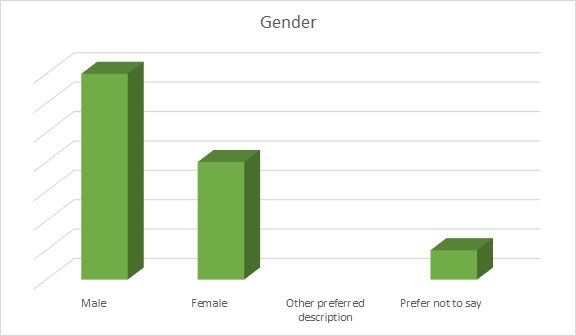
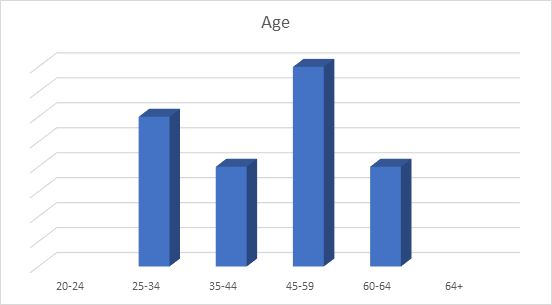
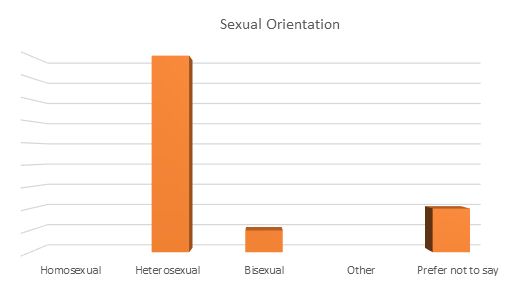
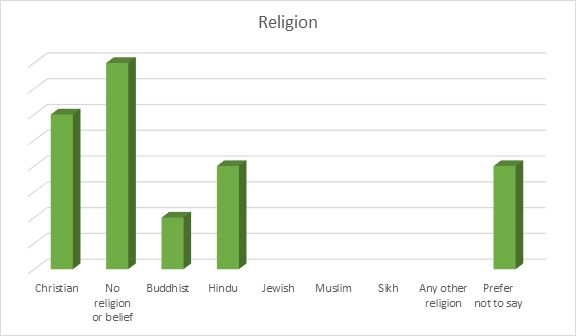
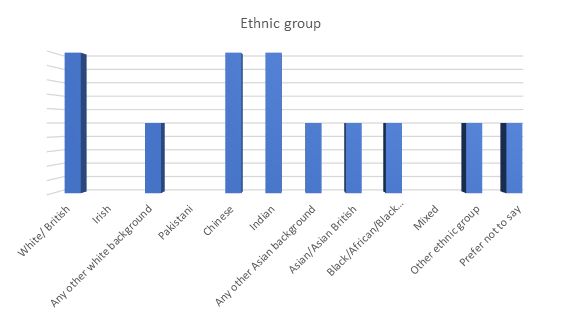
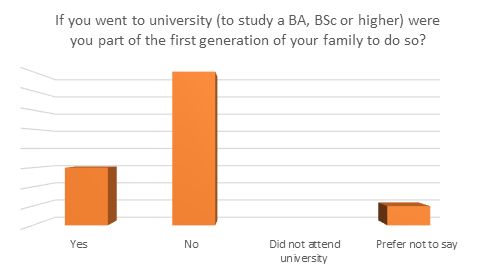
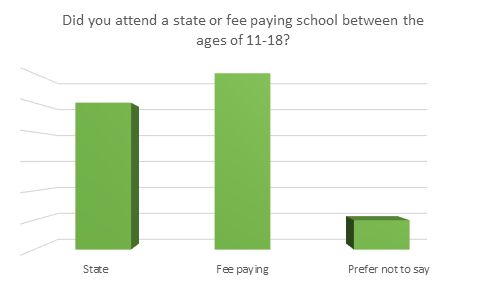
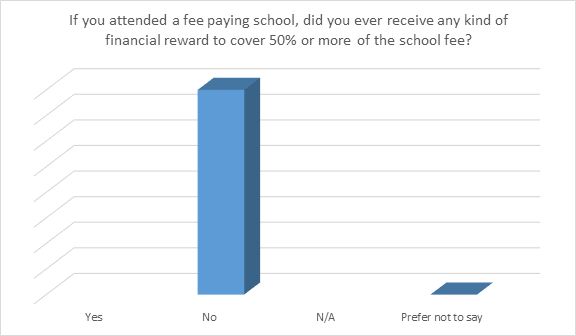
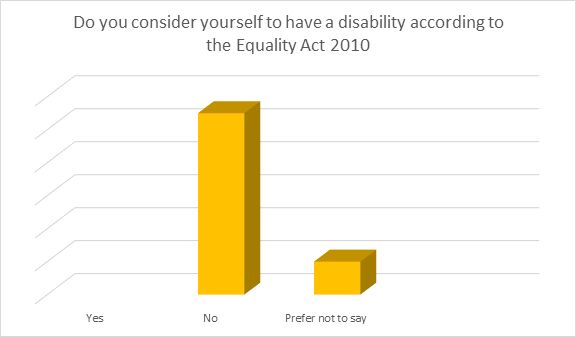
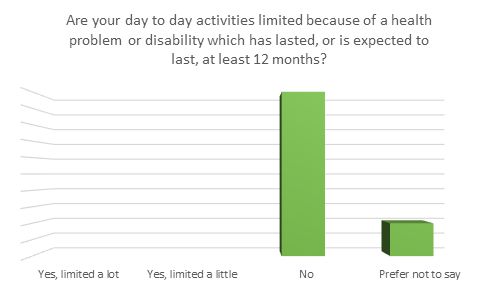
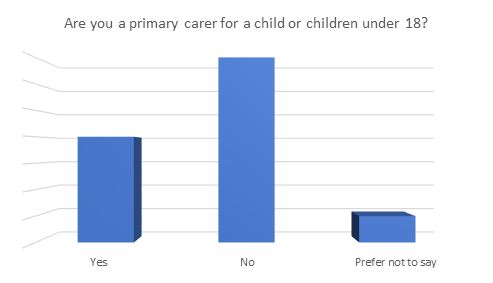
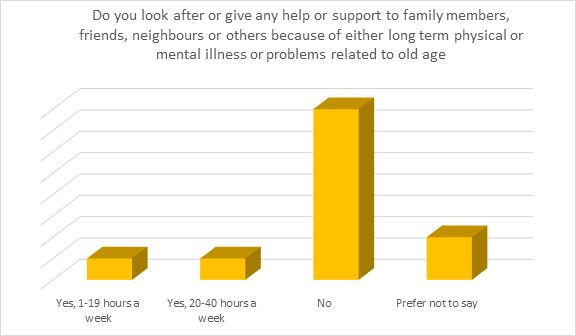
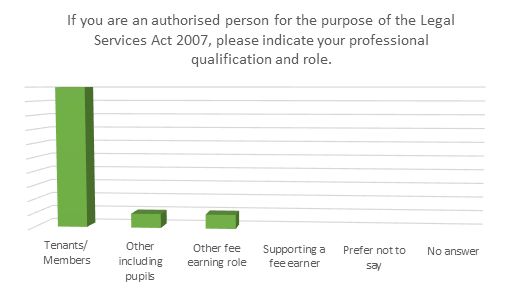
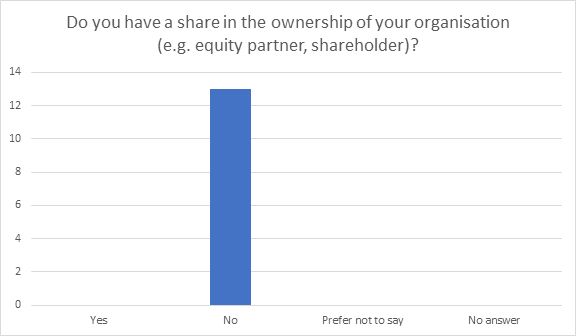
(May 2026)
Whitestone Chambers expects that all members, pupils and administrative staff will conduct themselves in a professional manner when interacting with others or when managing colleagues. All members should consider their own behaviour and the impact that this can have on others. Whitestone recognises that personalities and characters differ but, notwithstanding these differences, as a minimum standard all members, pupils and administrative staff are expected to:
This policy applies to all Chambers - or Bar - related situations and events, including but not limited to:
Unacceptable behaviour including bullying, harassment and victimisation, may involve actions, words or physical gestures that could reasonably be perceived to be the cause of another person’s distress or discomfort. Bullying or harassment may be by an individual against an individual or involve groups of people.
Whitestone Chambers defines behaviour as being unacceptable if:
All relationships of a romantic or sexual nature, whether actioned or pursued between members including administrative staff and pupils, mini pupils, interns or any other type of work experience candidate are banned and any such behaviour will result in expulsion or dismissal from Chambers of the member or administrative staff.
Any barrister who has reasonable grounds to believe that there has been sexual or other harassment by another barrister also has a professional duty to report it to the Bar Standards Board. To fail to do so is a breach of the Code of Conduct, unless they reasonably believe that the misconduct has already been reported to the BSB by someone else. If you are not sure whether an incident should be reported, or has already been reported, you can seek advice from the BSB or Bar Council, or Chambers’ Equality & Diversity Officer Mina Heung.
Guidance from the BSB can be found here: https://www.barstandardsboard.org.uk/static/1e61994f-c558-430b-9c7b7034081df4b7/Reporting-Serious-Misconduct-of-Others.pdf
Advice can be obtained from the BSB by calling them on 0207 611 1444 or from the Bar Council by calling their Ethical Queries Helpline on 0207 611 1307.
Victimisation
Victimisation is unfavourable treatment of a person (‘the victim’) to a detriment because they have:
Whitestone Chambers will not tolerate victimisation and a perpetrator will be subject to disciplinary action which may result in action up to and including dismissal or expulsion from the Chambers.
Whitestone Chambers expects a professional appearance and approach from all members, pupils and administrative staff. This includes, but not limited to:
All members, pupils and administrative staff should consider the acceptable behaviour policy when posting online and on social media. It should always be remembered that things written by individuals can affect the reputation and standing of Chambers.
Your use of social media is likely to engage your right to freedom of expression under Article 10 of the European Convention on Human Rights (ECHR) which includes the right to hold and express opinions and to receive and impart information and ideas. However, Article 10 is a qualified right which must be balanced against other rights and values protected by the ECHR (such as the rights and reputations of other members of the profession or consumers of barristers’ services).
The European Court of Human Rights has recognised that lawyers, by virtue of their profession, have a special status which justifies placing certain restrictions on their conduct:
“…the special status of lawyers gives them a central position in the administration of justice as intermediaries between the public and the courts. Such a position explains the usual restrictions on the conduct of members of the Bar… Regard being had to the key role of lawyers in this field, it is legitimate to expect them to contribute to the proper administration of justice, and thus to maintain public confidence therein.”
If you use social media whilst acting in a professional capacity, your conduct could bring into question your compliance with certain Core Duties and Conduct Rules in the BSB Handbook that apply to you when you are practising or otherwise providing legal services.
These include:
The BSB warn that, in general terms, any conduct on social media which might be said to be inconsistent with the standards expected of barristers may amount to a breach of the BSB Handbook.
You should therefore at all times consider whether your conduct risks contravening any of the Core Duties and Conduct Rules which apply to you.
In considering a potential breach of the BSB handbook in relation to conduct on social media, the regulator will take into account the following:
The full BSB guidance for barristers using social media can be found here:
The BSB guidance on the regulation of non-professional conduct can be found here:
Chambers are aware that sometimes individuals are not comfortable to raise concerns of unacceptable behaviour for fearing of creating a tense or problematic relationship in a shared work space. For this reason, Chambers have implemented a process that means minor internal grievances can be submitted anonymously. This service is primarily to be used for matters that could be considered minor and the submitter merely wants a record keeping of the incident in case it becomes a pattern of unacceptable behaviour.
The “Talk to Spot” service offered by the Bar Council is also an effective means for raising such complaints if the victim would prefer to do it on a platform outside of Chambers. ‘Talk to Spot’ is available to anyone working in and around the Bar to report inappropriate or abusive behaviour, including:
Talk to Spot enables individuals to create a date-stamped record of the incident, which can be kept private or, if the individual chooses, submitted (anonymously or with their name) to the Bar Council’s Equality and Diversity team. This allows the Bar Council to provide signposting and offer support where necessary. Further details, including how to access the platform are available on the Bar Council website. https://www.barcouncil.org.uk/support-for-barristers/equality-diversity-and-inclusion/talk-to-spot.html
For those raising anonymous concerns within Chambers, the following process should be used.
Alternatively, advice can be sought anonymously from the confidential Bar Council E&D Helpline on 0207 611 1426
Except where the alleged behaviour is deemed by the acceptable behaviour officer to be sufficiently serious to warrant an immediate formal investigation, unacceptable behaviour should in the first instance be dealt with by raising it with whichever full member the complainant feels most comfortable talking to. In many cases, this may resolve the issue without taking any further action and a constructive way of working in the future can be agreed. The Acceptable Behaviour Officer is Mina Heung.
If this approach is not successful or if the individual experiencing the unacceptable behaviour feels unable to take steps to resolve the issue themselves, then they should inform the acceptable behaviour officer of the situation as soon as possible. This Officer has an active role to play in resolving any issues that are raised under this policy and are expected to take action if any incidents involving unacceptable behaviour are brought to their attention, seeking advice and support from the Head of Chambers as appropriate. If the Head of Chambers is responsible for the unacceptable behaviour, then the cause of action will be determined solely by the Acceptable Behaviour Officer. If the Acceptable Behaviour Officer is a party to the issue raised, the issue should instead be raised with the Head of Chambers, the Head of Legal Operations or whichever full members of Chambers the individual is most comfortable raising it with.
The Acceptable Behaviour Officer should meet with the member of staff who is claiming that they have been subject to unacceptable behaviour and discuss the situation with them – establishing the circumstances, the impact that the individual considers it has had, and any steps that the individual may have already taken to address the situation. Members, pupils and administrative staff are encouraged to keep a record of any examples of the unacceptable behaviour that can support their complaint during the course of these discussions.
The Acceptable Behaviour Officer will then seek to agree a course of action with the individual. Where possible, resolution will be sought through informal means. This will usually involve a meeting between the individual(s) and the person(s) who has allegedly behaved unacceptably that is facilitated by the acceptable behaviour Officer with support from the Head of Chambers as appropriate. The individual and the subject of the complaint can each be accompanied by a colleague, friend or family member or member of their Inn for support as necessary. The aim of such a meeting is for agreement to be reached on what might constitute a more acceptable form of behaviour in the future. Where mediation is appropriate and where both parties agree to participate, the acceptable behaviour Officer may refer the case to mediation.
The Acceptable Behaviour Officer will consider if any issues raised reach the criminal standards and advise the Head of Chambers if, in their view, the matter needs to be reported to Police.
Sexual relationships between members and administrators and any pupil, mini pupil, intern or work experience candidate will be dealt with formally from the outset with the default position that the sanction is expulsion or dismissal for the member or administrator.
No formal action will be taken under this policy without prior consideration of the potential for informal resolution, unless the behaviour involved is deemed by the acceptable behaviour Officer to be sufficiently serious to warrant a formal investigation. Formal investigation under this policy need not be triggered by a specific complaint. Monitoring or concern may also be sufficient depending on the circumstances. Support will be considered and provided for both the complainant and the individual against whom the complaint has been made.
When making a formal complaint, the following process should be followed:
Formal complaints should be set out in writing – with any accompanying evidence – and addressed to the acceptable behaviour Officer, Mina Heung. If the complaint involves the acceptable behaviour Officer, a copy should be sent to the Head of Chambers. The written complaint should include details of any informal resolution that has been attempted, notes of any discussions held and also provide the names of any members, pupils or administrative staff who have witnessed the alleged unacceptable behaviour. Any evidence supporting the allegations made – such as emails or social media messages – should also be submitted as part of the written complaint.
The Acceptable Behaviour Officer will meet with the complainant to clarify the grounds of the complaint and explain what happens next.
The Acceptable Behaviour Officer will then arrange to meet with the person(s) who has allegedly behaved unacceptably, and a copy of the written complaint will be provided. At this point the acceptable Behaviour Officer and Head of Chambers will decide if the alleged perpetrator should be suspended or asked to work away from Chambers throughout this period. They will be given the opportunity to respond in writing to the allegations – providing evidence as appropriate - and to identify any witnesses who have agreed to be included in the formal investigation. A response must be received within 7 days unless the acceptable behaviour officer considers that an extension is appropriate.
The acceptable behaviour Officer will investigate the complaint made, establish whether there is a case to answer, and - where there is a case to answer - make recommendations. This will normally involve meeting both parties and any witnesses as appropriate, and consideration of any supporting evidence. A written record of the findings of the investigation will be submitted to the Head of Legal Operations who will then discuss any recommendations made with the Head of Chambers. If the Head of Legal Operations or the Head of Chambers are involved in the allegations, an independent member of members of administrative staff will then be chosen to consider the acceptable behaviour Officer’s recommendations. Pupils will be exempt from this duty as Chambers is of the believe that it would be an unfair responsibility to place on a pupil.
The acceptable behaviour Officer will write to both the complainant and the person against whom the allegations were made informing them of the outcome of the investigation. A copy of the acceptable behaviour Officer’s report may also be provided where appropriate. The content of the letter and report will be kept confidential by all parties involved.
Both parties will also be informed of the outcome of the investigation as appropriate and will be involved in the implementation of any recommendations and for monitoring the situation with support from the acceptable behaviour Officer as necessary.
Sanctions for proven complaints of bullying, harassment or sexual harassment include:
The sanction for any member or administrator that has a sexual relationship any pupil, mini pupil, Intern or work experience candidate is automatic expulsion or dismissal from Chambers.
Members, administrative staff and pupils involved in any proceedings taken under this Policy shall seek to ensure that confidentiality is maintained where practicable. Any investigations carried out under this Policy shall be undertaken with discretion and all parties will be made aware that they must treat as confidential any information shared during the course of any proceedings.
This policy will be reviewed by May 2028
Barristers in chambers practice in areas of civil law including, but not limited to, commercial, chancery, banking & finance and aviation. Our barristers advise and represent clients in:
The following are invited to contact our administrative team on 0207 760 7611 or 07923079333 for a quote for our barrister's services or by email at law@whitestonechambers.com
We will provide you with a quote as soon as possible. We always aim to set out quotes clearly, but if you receive your quote and there is something you do not understand, please contact us. All fee quotes exclude VAT unless otherwise stated.
Barristers in chambers most often charge hourly rates for private civil written work and charge a fixed fee for court appearances. All fees will be agreed to the client's satisfaction before any work is undertaken.
It may be possible to pay for your legal fees through an Insurance policy. Legal expenses insurance falls under two banners, Before the event insurance (BTE) and after the event insurance (ATE).
Before the event insurance (BTE) is taken out by people who want to protect themselves just in case something happens. It is often sold as part of the overall package for car and household contents insurance policies, or as an extra 'add on' benefit which you can pay for with these types of policies. It is possible you may already have this kind of insurance under an existing insurance policy so it is certainly worth checking with your Insurance provider.
After the event Insurance is a legal expenses policy that can be purchased on your behalf when you are in a dispute, to cover the costs of litigation. It protects against the risk of being ordered to pay your opponent's costs. This is usually purchased in the absence of suitable BTE cover and is specifically tailored to the type of claim you are pursuing. After the event insurance usually works alongside a Conditional Fee Agreement (CFA). Please note that Whitestone Chambers barristers only undertake CFA's in very limited circumstances.
Timescales for a case may vary depending on factors such as a barristers' availability, the type and complexity of the case, the other side's approach and court waiting times. It is our policy that all paperwork be returned to you completed within 14 days unless you agree another deadline (shorter or longer) appropriate to your case. We will notify you in the unlikely event of our being unable to meet the deadline set.
The Bar Council's Public Access guidance for client's can be found here https://www.barstandardsboard.org.uk/uploads/assets/20f0db2a-a40c-4af9-95b1b9557ad748e9/Public-Access-Guidance-for-Lay-Clients.pdf. This will help you to understand how the public access scheme works and explains how you can use it to instruct barristers directly.
Barristers in chambers are regulated by the Bar Standards Board. You can search the Barristers' Register on the Bar Standards Board's website: https://www.barstandardsboard.org.uk/for-the-public/search-a-barristers-record/the-barristers-register.html. This shows (1) whether a barrister has a current practicing certificate, and (2) whether a barrister has any disciplinary findings, which are published on the Bar Standards Board's website in accordance with their policy. Alternatively you can contact the Bar Standards Board on 020 7611 1444 to ask about this or by email at contactus@BarStandardsBoard.org.uk.
Whitestone Chambers complaints procedure can be found here https://www.whitestonechambers.com/protocol.html.
If you are owed £10,000 or more by a company and are able to prove that the company cannot pay you, you may be able to apply to a court to close or 'wind-up' the company. Our barristers can advise you on the process of issuing a winding-up petition and represent you at the court hearing. If you are company which has had a winding-up petition issued against you, our barristers can also advise you on the process of defending it and represent you at the court hearing.
Timescales may vary depending on factors such as barristers' availability, the need for additional documents and court waiting times.
Below we provide estimates based on the ranges of fees for barristers in Whitestone Chambers. All fees exclude VAT (where applicable). Our fixed fees may be towards the higher end of the range if you need a more experienced barrister and/or the matter is more complex. If the matter is particularly complex, your fees may also be higher than the estimates below. All fees will be agreed to the client's satisfaction before any work is undertaken. If you are issuing a winding-up petition, you should also note that even if the company is wound up, you might not get all or any of the money you are owed.
| Stage of case | Range of fees | Time estimate |
|---|---|---|
| Advice on issuing or defending winding-up petition | £250 - £500 an hour. | For work = 2-5 hours For return to client = 1-3 weeks |
| Assistance with completion of forms and all necessary steps to take | £250 - £500 an hour. | For work = 1-3 hours For return to client = 1-2 weeks |
| Preparation for and attendance at court hearing | £350 - £2500 | Preparation time = 30 minutes – 2 hours. Wait time for court date = At the discretion of the court. |
Please note that not all of our public access barristers are authorised to conduct litigation. If you instruct a barrister who is not authorised to conduct litigation you will need to do this yourself.
The extent of what your barrister can and cannot do for you is set out in our public access letter of engagement. If you have any questions about the range of work your barrister can undertake for you, they can be addressed to Head of Legal Operations Robert Pidgeon by email to rp@whitestonechambers.com or by telephone on 0207 822 8801.
If you are unhappy with the outcome of our investigation and you fall within their jurisdiction you may take up your complaint with the Legal Ombudsman, https://www.legalombudsman.org.uk/, the independent complaints body for complaints about lawyers, at the conclusion of our consideration of your complaint. The Ombudsman is not able to consider your complaint unless it has first been investigated by us.
Please note that the Legal Ombudsman, the independent complaints body for service complaints about lawyers, has time limits in which a complaint must be raised with them. The time limits are:
The Ombudsman can extend the time limit in exceptional circumstances. Chambers must therefore have regard to that timeframe when deciding whether they are able to investigate your complaint. We will not therefore usually deal with complaints that fall outside of the Legal Ombudsman's time limits.
The Ombudsman will also only deal with complaints from consumers. This means that only complaints from the barrister's client are within their jurisdiction. Non-clients who are not satisfied with the outcome of our investigation should contact the Bar Standards Board rather than the Legal Ombudsman.
YOU CAN WRITE TO THEM AT:
Legal Ombudsman, PO Box 6806, Wolverhampton WV1 9WJ
Telephone number: 0300 555 0333
Email: enquiries@legalombudsman.org.uk
Website: https://www.legalombudsman.org.uk/
The Legal Ombudsmen decision data provides information to help people understand complaints that the Legal Ombudsmen investigates, the decisions they make and how they review their own performance. The decision data can be found here at: https://www.legalombudsman.org.uk/information-centre/data-centre/#ombudsman-decision-data
If you are unhappy with the outcome of the investigation, alternative complaints bodies such as Radanks (www.radanks.com) also exist which are competent to deal with complaints about legal services, should you and the barrister both wish to use such a scheme. If you wish to use Radanks, please contact us to discuss this. Please also note that if mediation is used, neither you nor the barrister is required to accept the proposed resolution. If mediation does not resolve the complaint, you may still make a complaint to the Legal Ombudsmen (provided you fall within their jurisdiction and you do so within the time limit).
(2026)
1. Chambers aspires to create a safe environment for work, education and training. We aim to encourage and facilitate working practices and services that support the health and well-being of all staff, pupils and barristers.
2. Work can have a positive impact on our health and wellbeing. Healthy and well-motivated barristers and staff members can have an equally positive impact on the productivity and effectiveness of Chambers and individual members. Fostering a working environment that protects the physical and mental well-being of its people is good for all of Chambers.
3. Responsibility for health and wellbeing at work belongs to everyone in Chambers. Factors that can influence whether people will have a positive or negative relationship with work include:
4. This policy provides a framework within which Chambers encourages and facilitates working practices and services that support well-being. It aims to draw upon good practice, recognising informal support arrangements particularly among barristers, and to be flexible rather than prescriptive.
5. Whitestone seeks to protect members, pupils and staff and promote best practice in conjunction with “promoting dignity, courtesy and respect” in learning environments and the workplace. It is our aim to ensure that all members of Chambers have some sense of autonomy and voice and feel supported by colleagues throughout the organisation.
6. Chamber’s Wellbeing Officer is Gordon Aber.
7. Chambers acknowledges and seeks to raise awareness that because barristers are self-employed there is an assumption that they have control of their work-life balance. However, the very fact of being self-employed adds pressures that are not experienced by employees. The desire to maintain a busy practice and to keep staff and solicitors happy can result in taking on too much work. This can seriously upset work-life balance and may lead to unhealthy work-related stress. Further, we acknowledge the stresses felt by administrative staff who, on occasion, need to be reachable outside of Chambers opening hours.
8. Chambers operates a supportive referral scheme when it is identified that pupils and barristers who display more than occasional cognitive, emotional, physical or behavioural symptoms of stress which give rise to concerns by colleagues or senior staff will be invited, in the first instance, to meet with their pupil supervisor, or a clerk of their choice, to discuss their workload and the management of their practice.
9. At any time, pupils and barristers can arrange to see any member of Chambers or administrative staff if they feel a need to rebalance their practice in light of concerns about their well-being to ensure pupils can “complete their education and training and... achieve the best outcome that they are capable of” (AF 27.2) and all other members and staff feel protected.
10. To complement these resources, Chambers also provide a subscription to the Aura Health App, which uses AI to personalise meditation and therapy sessions to their mood, goals and past behaviours.
11. Chambers operates flexible working and is supportive of providing adjustments, for short reviewable periods where the barrister or pupil feels that this is appropriate for them to manage their work life balance. Our Flexible Working Policy can be found on our website. Details of working time arrangements for pupils are included in the pupil induction manual. Both documents are provided to pupils electronically and further copies can be obtained from the Head of Legal Operations.
12. There is substantial evidence that a flexible approach to working patterns can have significant organisational benefits, including reduced absenteeism, improved morale and greater productivity. There are many different ways of structuring working patterns and Chambers will consider requests from staff members for part-time working; flexible working hours; compressed working hours or working from home.
13. Mental ill health and stress are associated with many of the leading causes of disease and disability in our society. Promoting and protecting the mental wellbeing of people in Chambers is important for individuals’ physical health, social wellbeing and productivity.
14. Mental wellbeing in the workplace is relevant to all and everyone has a responsibility to contribute to improved mental wellbeing at work. Addressing workplace mental wellbeing can help strengthen the positive, protective factors of employment, reduce risk factors for mental ill health and improve general health. It can also help promote the employment of people who have experienced mental health problems, and support them once they are at work.
15. Important aspects of mental health and wellbeing includes providing information and raising awareness, management skills to deal with issues around mental health and stress effectively, providing a supportive work environment, offering assistance, advice and support to anyone experiencing a mental health problem or returning to Chambers after a period of absence due to mental health problems.
16. This policy is complementary to established policies including: Health & Safety, Grievance, Equality and Diversity, Harassment, Reasonable Adjustment, Parental Leave and Flexible Working.
17. To develop a supportive culture, address factors that may negatively affect mental wellbeing, and to develop management skills we will:
18. To provide support for staff, pupils and barristers experiencing mental health difficulties, we will:
19. To demonstrate a positive and enabling attitude to employees and job applicants with mental health issues we will:
Chambers provides an Employee Assistance Program that can be accessed by all staff, members and pupils 24 hours a day for confidential support. Their portal can be accessed at http://www.employeeassistance.org.uk/. Log in details are provided to all members, pupils and staff. Further details are available on the posters within chambers or from Robert Pidgeon, Head of Legal Operations.
Further details on Wellbeing from the Bar Council can be found here: https://www.barcouncil.org.uk/support-for-barristers/wellbeing-personal-career-support/wellbeing-at-the-bar.html
www.lawcare.org.uk is a mental health charity for everyone in the legal sector offering free confidential direct support, information and resources and a Peer Support programme where you can speak to a volunteer who has worked in law themselves. The Peer Support network offer support, encouragement and mentoring on a range of different issues such as alcohol addiction, stress and anxiety.
This policy will be reviewed by 2028
(June 2026)
1.1 This Policy has been produced in accordance with the Bar Standards Board Handbook rC.110.3(l), which requires that –
“Chambers has a flexible working policy which covers the right of a member of Whitestone , manager or employee (as the case may be) to take a career break, to work part-time, to work flexible hours, or to work from home, so as to enable them to manage their family responsibilities or disability without giving up work”.
1.2 This policy has been written as a guide to how Chambers will deal with Members who wish to work flexibly for any of the above reasons, or for reasons of long term illness or sabbatical. Employees should refer to their Contracts of Employments and any staff policies for the difference provisions that apply to them, rather than this policy.
1.3 All Members of Chambers, as self-employed individuals, are able to set their own working patterns, subject firstly to their obligations to pay their Chambers’ expenses and rent, unless specific provision is made in such other policy for any reduction or modification of those expenses; and secondly, regardless of the ability to work flexibly, all Members of Chambers shall devote such time to their practice as shall be reasonably necessary to ensure that they provide proper professional services to lay and professional clients of their own or of Chambers.
1.4 Chambers endeavours to work within the relevant statutory, regulatory and professional frameworks in relation to equality and diversity, and recognises that those with certain protected characteristics e.g. those with disabilities; those with caring responsibilities; and those in older age groups, are afforded protection from various types of discrimination in relation to flexible working and reasonable adjustments under equalities legislation.
1.5 This policy is made available and drawn to the attention of all Members of Chambers, Clerks and Staff, all of whom are required to:
1.6 This policy will be reviewed by Chambers’ Equality Diversity and Inclusion Officer, Miss Mina Heung, every two years who will report to the Head of Chambers on its effectiveness and make recommendations as required.
2.1 This Policy deals with –
3.1 Chambers recognises that, from time to time, Members may decide they want to work more flexibly than is customary in full-time self-employed practice at the Bar, so as to enable them to manage childcare, family or other responsibilities, or to manage the effects of any ill-health or disability that they or a family member may have, alongside the continuation of their practice. Generally, such arrangements are a matter of the Member’s individual choice in accordance with 1.1 above.
3.2 These general guidelines apply to all Members of Chambers working flexibly.
3.3 In order to ensure that Members working flexibly are not being discriminated against on any of the protected grounds under the Equality Act 2010 and for reasons of good practice management, they are encouraged to discuss with the Head of Legal Operations their wish to work flexibly and to discuss the ongoing arrangements in their practice reviews. They are also encouraged to declare that they are working flexibly when information is being gathered for the purposes of Chambers’ collection of diversity information for the purposes of the Bar Standards Board’s Handbook EDI monitoring provisions.
3.4 Chambers recognised that it is in its long-term interest to retain all Members, including those who work flexibly, in whose practices it has invested time and money and that accommodating and actively managing flexible working arrangements is likely to aid long-term retention of such Members in Chambers and in practice at the Bar.
3.5 Chambers shall encourage its clerks to undertake training in relation to flexible working and will appoint the Equality Diversity and Inclusion Officer to act as the Flexible Working Representative (‘FWR’) who will monitor numbers/types of flexible working arrangements and act as a source of information on flexible working for Members, and a source of guidance and information for clerks in relation to their responsibilities under this policy.
3.6 Chambers will ensure that a Member working flexibly for whatever reasons is:
3.7 The following guidelines should be followed by Members and Chambers (through the clerking team):
4.1 Any Member of Chambers who wishes to make a complaint about the application of this policy or any other matter in respect of flexible working should in the first instance contact the Equality Diversity and Inclusion Officer who will endeavour to resolve the complaint informally. If such attempt at a resolution fails, a grievance can be pursued under Chambers’ Grievance Procedure.
4.2 Members who have a disability should also have reference to Chambers’ Reasonable Adjustments Policy if necessary, and the Government’s Access to Work Scheme, which provides equipment and assistance to disabled individuals who may need additional equipment to be supplied to remove a disadvantage they suffer in the workplace.
This policy will be reviewed in June 2028
(June 2026)
Publicly available applications driven by generative artificial intelligence (GenAI), such as ChatGPT, Google Gemini, Microsoft Copilot, Claude or image generators (DALL-E 2, Midjourney) are impressive and widely popular. But while these content-generating tools may offer attractive opportunities to streamline work functions and increase our efficiency, they come with serious security, accuracy and intellectual property risks. This policy highlights the unique issues raised by GenAI, helps employees understand the guidelines for its acceptable use, and protects Chambers’ confidential or sensitive information, trade secrets, intellectual property, workplace culture, commitment to diversity and brand.
This policy applies to the use of any third party or publicly available GENAI tools, including ChatGPT, Google Gemini, Microsoft Copilot, Claude and other similar applications that mimic human intelligence to generate answers, work product, or perform certain tasks.
Violating this policy may result in disciplinary action, up to and including immediate termination, and could result in legal action. If you are concerned that someone has violated this policy, report this behaviour to your supervisor or the Acceptable Behaviour Officer.
The Bar Standards Board have provided a document entitled “Guidance on the use of Artificial Intelligence and other Technologies” which incorporates guidance to address the risks of GenAI tools as used within the legal services professions since their development. A copy is annexed to our AI Policy.
Core duties that are likely to be engaged when using AI:
1. Core Duty 1: You must observe your duty to the court in the administration of justice.
2. Core Duty 2: You must act in the best interests of each client.
3. Core Duty 3: You must act with honesty and with integrity.
4. Core Duty 7: You must provide a competent standard of work and service to each client.
5. Core Duty 8: You must not discriminate unlawfully against any person.
6. Core Duty 10: You must take reasonable steps to manage your practice, or carry out your role within your practice, competently and in such a way as to achieve compliance with your legal and regulatory obligations.
The Bar Standards Board have provided a document entitled “Professional Statement for Barristers” which incorporates the threshold standard and competences for Barristers. A copy is annexed to our AI Policy.
Aspects of the Professional Statement that may be breached by misuse of GenAI.
This policy will be reviewed in December 2026.
(June 2026)
We are committed to a creating an inclusive and positive environment in which everyone considers they are being treated fairly and equitably. We expect everyone to carry out their work and conduct themselves in a professional manner that promotes our values and the interests of Whitestone Chambers.
We appreciate that there is a growing need for many of our members to use social media to effectively carry out their roles in chambers and that, outside of the workplace, you will likely use various platforms to communicate with your peers. We encourage you to exercise your right to speak freely and openly. However, we also expect you to balance your content with our professional values and the rights of others and ensure that you are not using social media in a way that might damage our reputation or the reputations of any of the individuals working within Whitestone Chambers.
This policy is designed to encourage and support you to make appropriate use of social media platforms, both in a professional and personal capacity. It explains the general rules and principles that we expect you to follow when using social media, and the potential consequences if you fail to do so.
All members, pupils and administrative staff should consider this policy when posting online and on social media. It should always be remembered that things written by individuals can affect the reputation and standing of Chambers.
This policy is not part of your membership agreement, and we can change it at any time. If you have any questions about this policy, please talk to The Acceptable Behaviour Officer Miss Analissa Lim.
This policy applies to all Members, pupils and administrative staff who use social media both inside and outside of work, no matter whether for business or personal reasons. It refers to social media platforms which directly associate you with Whitestone Chambers and those which do not.
In this policy:
For the purposes of this policy, social media includes any type of interactive online media, or public messaging application, that you use to communicate and share data or other forms of content, such as videos, audio files, or photographs, with other individuals, organisations, or communities. This includes, but is not limited to, social media channels such as X (formally known as Twitter), Bluesky, Threads, Facebook, LinkedIn, Snapchat, Instagram, YouTube, TikTok, Twitch, Discord and Reddit.
Whilst short message exchange platforms and other similar communication tools such as WhatsApp, Outlook, and Gmail are not traditionally classified as social media and therefore fall outside of this policy, we recommend that you exercise caution when using them to speak about work. This is because the messages you exchange through them can easily be forwarded to others or captured using a screenshot and made public.
Your use of social media is likely to engage your right to freedom of expression under Article 10 of the European Convention on Human Rights (ECHR) which includes the right to hold and express opinions and to receive and impart information and ideas. However, Article 10 is a qualified right which must be balanced against other rights and values protected by the ECHR (such as the rights and reputations of other members of the profession or consumers of barristers’ services).
The European Court of Human Rights has recognised that lawyers, by virtue of their profession, have a special status which justifies placing certain restrictions on their conduct:
“…the special status of lawyers gives them a central position in the administration of justice as intermediaries between the public and the courts. Such a position explains the usual restrictions on the conduct of members of the Bar… Regard being had to the key role of lawyers in this field, it is legitimate to expect them to contribute to the proper administration of justice, and thus to maintain public confidence therein.”
If you use social media whilst acting in a professional capacity, your conduct could bring into question your compliance with certain Core Duties and Conduct Rules in the BSB Handbook that apply to you when you are practicing or otherwise providing legal services.
These include:
The BSB warn that, in general terms, any conduct on social media which might be said to be inconsistent with the standards expected of barristers may amount to a breach of the BSB Handbook.
You should therefore at all times consider whether your conduct risks contravening any of the Core Duties and Conduct Rules which apply to you.
In considering a potential breach of the BSB handbook in relation to conduct on social media, the regulator will take into account the following:
1. How a hypothetical, ordinary reasonable person would be likely to respond to your conduct, having regard to the wider context in which it occurred. This will involve an objective assessment based on the “natural and ordinary meaning” of what you post. The social media platform which you use may also be relevant. The views and/or reaction of any individual who reported the conduct to us, while potentially relevant, is unlikely to be determinative.
2. The substance of what you post (including the type of speech engaged, such as whether it is “mere gossip” or contributes to a debate in the public interest. The regulator recognise that political speech is afforded the highest level of protection under Article 10 and is something in which they are unlikely to have a regulatory interest. However, the BSB are likely to have a regulatory interest in conduct which is not afforded the protections guaranteed by Article 10, by virtue of Article 17 ECHR (ie conduct which is aimed at the destruction of the rights and freedoms of others). Case law from the European Court of Human Rights has found that this includes extreme or grave forms of hate speech, a threat of or incitement to violence, xenophobia, racial discrimination, Antisemitism, Islamophobia and Holocaust denial.
3. The manner in which you express your views (including the language used), the mode of publication, and the broader context. While the right to hold a view and say something may be protected by Article 10, if there is something objectionable about the manner in which it is expressed, this could be a potential breach of the BSB Handbook and therefore the BSB have a regulatory interest in your conduct.
4. The impact of your conduct. This may include the impact on individuals or organisations, and/or on public trust and confidence in you or the profession. The purpose behind your conduct may not always be relevant.
The full BSB guidance for barristers using social media can be found here:
The BSB guidance on the regulation of non-professional conduct can be found here:
Guidance on the regulation of non-professional conduct
We understand that you may wish to use your own devices, such as mobile phones, tablets, and laptops to access social media platforms whilst you are at work. Whilst this is permitted, we expect you to limit your personal use of social media to your non-working hours, which includes your lunch and other agreed breaks.
You are permitted to make reasonable and appropriate use of social media websites from the computers or devices that we have provided you with throughout the working day, if doing so is directly linked to your work.
We recognise that, outside of the workplace, you will likely use various social media platforms to communicate with your peers. Whilst you will not be using our accounts for this purpose, you should still ensure that you are not posting, or engaging with, content in a way that might damage our reputation or the reputations of any of the individuals working within Whitestone Chambers.
To enable this, you must consider who can see your posts and engagements, and the extent to which your activity will be associated, by them, with Whitestone Chambers. Your audience and those whose algorithms are geared towards content like your own may include other members of the legal community, including our own, and other barristers, pupils and chambers professionals, aspiring barristers, private and lay clients, members of the press, and employees of the Bar Council, Bar Standards Board, and other professional membership organisations and regulators.
Regardless of whether you are using social media in a personal, or professional, capacity, we expect you to ensure that you are not doing so in any way that we would consider to be inappropriate. This includes, but is not limited to posting or engaging with content that is:
This includes, but is not limited to content that:
This includes, but is not limited, to:
When using social media, you should bear in mind that people have different tolerances when it comes to determining what is appropriate, and that the content that you consider to be humorous may be considered distasteful or offensive by others.
Given the scope for misinterpretation, the difficultly of withdrawing posts, the speed of circulation, the size of the audience and the potential for posts to be commented on or republished in unforeseen ways, we ask that you take an extremely cautious approach to publishing, or engaging with, social media content. You should ensure that you are certain we would not consider your actions to be inappropriate and, if you are in any doubt, talk to The Acceptable Behaviour Officer Miss Analissa Lim beforehand.
You are permitted to identify yourself as a member of Whitestone Chambers on your personal social media accounts. However, when doing so, you must include an express disclaimer that broadly conveys the following: “the views expressed here are mine alone and do not reflect the views of my Whitestone Chambers”
If we consider there to be a valid reason for checking your internet usage, then as part of our disciplinary processes we may monitor your online activities for a set period and with the authorisation of The Acceptable Behaviour Officer, Miss Analissa Lim. This may include, but is not limited to, instances where:
If your use of social media falls outside of this policy then it may constitute a disciplinary offence which we may deal with under our disciplinary policy.
In serious cases, for example where your use of social media is considered to amount to discrimination, bullying, harassment, or victimisation, your actions may constitute gross misconduct, which may result in your dismissal from Chambers.
This policy will be reviewed in June 2028.
(JUNE 2026)
Chambers expects that all Members, pupils and administrative staff will conduct themselves in a professional manner when interacting with others or when managing colleagues. All Members should consider their own behaviour and the impact that this can have on others. Whitestone recognises that personalities and characters differ but, notwithstanding these differences, as a minimum standard all Members, pupils and administrative staff are expected to:
This policy applies to all Chambers - or Bar - related situations and events, including but not limited to:
Unacceptable behaviour including bullying, harassment and victimisation, may involve actions, words or physical gestures that could reasonably be perceived to be the cause of another person’s distress or discomfort. Bullying or harassment may be by an individual against an individual or involve groups of people.
Chambers defines behaviour as being unacceptable if:
Unacceptable behaviour does not have to be face-to-face, and may take many forms such as written, telephone or e-mail communications or through social media.
Some examples of unacceptable behaviour are:
All relationships of a romantic or sexual nature, whether actioned or pursued between Members including administrative staff and pupils, mini pupils, interns or any type of work experience candidate are banned and any such behaviour will result in expulsion or dismissal from Chambers of the Member or administrative staff.
Any barrister who has reasonable grounds to believe that there has been sexual or other harassment by another barrister also has a professional duty to report it to the Bar Standards Board. To fail to do so is a breach of the Code of Conduct, unless they reasonably believe that the misconduct has already been reported to the BSB by someone else. If you are not sure whether an incident should be reported, or has already been reported, you can seek advice from the BSB or Bar Council, or Chambers’ Equality Diversity and Inclusion Officer Miss Mina Heung.
Guidance from the BSB can be found here:
Advice can be obtained from the BSB by calling them on 0207 611 1444 or from the Bar Council by calling their Ethical Queries Helpline on 0207 611 1307.
Victimisation is unfavourable treatment of a person (‘the victim’) to a detriment because they have:
Chambers will not tolerate victimisation and a perpetrator will be subject to disciplinary action which may result in action up to and including dismissal or expulsion from the Chambers.
Chambers expects a professional appearance and approach from all Members, pupils and administrative staff. This includes, but not limited to:
All Members, pupils and administrative staff should consider the acceptable behaviour policy when posting online and on social media. It should always be remembered that things written by individuals can affect the reputation and standing of Chambers.
Your use of social media is likely to engage your right to freedom of expression under Article 10 of the European Convention on Human Rights (ECHR) which includes the right to hold and express opinions and to receive and impart information and ideas. However, Article 10 is a qualified right which must be balanced against other rights and values protected by the ECHR (such as the rights and reputations of other members of the profession or consumers of barristers’ services).
The European Court of Human Rights has recognised that lawyers, by virtue of their profession, have a special status which justifies placing certain restrictions on their conduct:
“…the special status of lawyers gives them a central position in the administration of justice as intermediaries between the public and the courts. Such a position explains the usual restrictions on the conduct of members of the Bar… Regard being had to the
key role of lawyers in this field, it is legitimate to expect them to contribute to the proper administration of justice, and thus to maintain public confidence therein.”
If you use social media whilst acting in a professional capacity, your conduct could bring into question your compliance with certain Core Duties and Conduct Rules in the BSB Handbook that apply to you when you are practising or otherwise providing legal services.
These include:
The BSB warn that, in general terms, any conduct on social media which might be said to be inconsistent with the standards expected of barristers may amount to a breach of the BSB Handbook.
You should therefore at all times consider whether your conduct risks contravening any of the Core Duties and Conduct Rules which apply to you.
In considering a potential breach of the BSB handbook in relation to conduct on social media, the regulator will take into account the following:
Further details can be found in Chambers’ Social Media policy.
The full BSB guidance for barristers using social media can be found here:
The BSB guidance on the regulation of non-professional conduct can be found here:
Chambers are aware that sometimes individuals are not comfortable to raise concerns of unacceptable behaviour for fearing of creating a tense or problematic relationship in a shared workspace. For this reason, Chambers have implemented a process that means minor internal grievances can be submitted anonymously. This service is primarily to be used for matters that could be considered minor and the submitter merely wants a record keeping of the incident in case it becomes a pattern of unacceptable behaviour.
The “Talk to Spot” service offered by the Bar Council is also an effective means for raising #
Talk to Spot enables individuals to create a date-stamped record of the incident, which can be kept private or, if the individual chooses, submitted (anonymously or with their name) to the Bar Council’s Equality and Diversity team. This allows the Bar Council to provide signposting and offer support where necessary. Further details, including how to access the platform are available on the Bar Council website. https://www.barcouncil.org.uk/support-for-barristers/equality-diversity-and-inclusion/talk-to-spot.html
For those raising anonymous concerns within Chambers, the following process should be used.
Alternatively, advice can be sought anonymously from the confidential Bar Council EDI Helpline on 0207 611 1426
Except where the alleged behaviour is deemed by the Acceptable Behaviour Officer to be sufficiently serious to warrant an immediate formal investigation, unacceptable behaviour should in the first instance be dealt with by raising it with whichever full member the complainant feels most comfortable talking to. In many cases, this may resolve the issue without taking any further action and a constructive way of working in the future can be agreed. The Acceptable Behaviour Officer is Miss Analissa Lim.
If this approach is not successful or if the individual experiencing the unacceptable behaviour feels unable to take steps to resolve the issue themselves, then they should inform the Acceptable Behaviour Officer of the situation as soon as possible. This Officer has an active role to play in resolving any issues that are raised under this policy and are expected to take action if any incidents involving unacceptable behaviour are brought to their attention, seeking advice and support from the Head of Chambers as appropriate. If the Head of Chambers is responsible for the unacceptable behaviour, then the cause of action will be determined solely by the Acceptable Behaviour Officer. If the Acceptable Behaviour Officer is a party to the issue raised, the issue should instead be raised with the Head of Chambers, the Head of Legal Operations or whichever full members of Chambers the individual is most comfortable raising it with.
The Acceptable Behaviour Officer should meet with the member of staff who is claiming that they have been subject to unacceptable behaviour and discuss the situation with them – establishing the circumstances, the impact that the individual considers it has had, and any steps that the individual may have already taken to address the situation. Members, pupils and administrative staff are encouraged to keep a record of any examples of the unacceptable behaviour that can support their complaint during the course of these discussions.
The Acceptable Behaviour officer will then seek to agree a course of action with the individual. Where possible, resolution will be sought through informal means. This will usually involve a meeting between the individual(s) and the person(s) who has allegedly behaved unacceptably that is facilitated by the Acceptable Behaviour Officer with support from the Head of Chambers as appropriate. The individual and the subject of the complaint can each be accompanied by a colleague, friend or family member or member of their Inn for support as necessary. The aim of such a meeting is for agreement to be reached on what might constitute a more acceptable form of behaviour in the future. Where mediation is appropriate and where both parties agree to participate, the Acceptable Behaviour Officer may refer the case to mediation.
The Acceptable Behaviour Officer will consider if any issues raised reach the criminal standards and advise the Head of Chambers if, in their view, the matter needs to be reported to Police.
Sexual relationships between Members and administrators and any pupil, mini pupil, intern or work experience candidate will be dealt with formally from the outset with the default position that the sanction is expulsion or dismissal for the Member or administrator.
No formal action will be taken under this policy without prior consideration of the potential for informal resolution, unless the behaviour involved is deemed by the acceptable behaviour Officer to be sufficiently serious to warrant a formal investigation. Formal investigation under this policy need not be triggered by a specific complaint. Monitoring or concern may also be sufficient depending on the circumstances. Support will be considered and provided for both the complainant and the individual against whom the complaint has been made.
When making a formal complaint, the following process should be followed:
Formal complaints should be set out in writing – with any accompanying evidence – and addressed to the Acceptable Behaviour Officer, Miss Analissa Lim. If the complaint involves the Acceptable Behaviour Officer, a copy should be sent to the Head of Chambers. The written complaint should include details of any informal resolution that has been attempted, notes of any discussions held and also provide the names of any members, pupils or administrative staff who have witnessed the alleged unacceptable behaviour. Any evidence supporting the allegations made – such as emails or social media messages – should also be submitted as part of the written complaint.
The Acceptable Behaviour Officer will meet with the complainant to clarify the grounds of the complaint and explain what happens next.
The Acceptable Behaviour Officer will then arrange to meet with the person(s) who has allegedly behaved unacceptably, and a copy of the written complaint will be provided. At this point the acceptable Behaviour Officer and Head of Chambers will decide if the alleged perpetrator should be suspended or asked to work away from Chambers throughout this period. They will be given the opportunity to respond in writing to the allegations – providing evidence as appropriate - and to identify any witnesses who have agreed to be included in the formal investigation. A response must be received within 7 days unless the Acceptable Behaviour Officer considers that an extension is appropriate.
The Acceptable Behaviour Officer will investigate the complaint made, establish whether there is a case to answer, and - where there is a case to answer - make recommendations. This will normally involve meeting both parties and any witnesses as appropriate, and consideration of any supporting evidence. A written record of the findings of the investigation will be submitted to the Head of Legal Operations who will then discuss any recommendations made with the Head of Chambers. If the Head of Legal Operations or the Head of Chambers are involved in the allegations, an independent member of members of administrative staff will then be chosen to consider the acceptable behaviour Officer’s recommendations. Pupils will be exempt from this duty as Chambers is of the believe that it would be an unfair responsibility to place on a pupil.
The Acceptable Behaviour Officer will write to both the complainant and the person against whom the allegations were made informing them of the outcome of the investigation. A copy of the Acceptable Behaviour Officer’s report may also be provided where appropriate. The content of the letter and report will be kept confidential by all parties involved.
Both parties will also be informed of the outcome of the investigation as appropriate and will be involved in the implementation of any recommendations and for monitoring the situation with support from the Acceptable Behaviour Officer as necessary.
Sanctions for proven complaints of bullying, harassment or sexual harassment include:
The sanction for any Member or administrator that has a sexual relationship any pupil, mini pupil, Intern or work experience candidate is automatic expulsion or dismissal from Chambers.
Members, administrative staff and pupils involved in any proceedings taken under this Policy shall seek to ensure that confidentiality is maintained where practicable. Any investigations carried out under this Policy shall be undertaken with discretion and all parties will be made aware that they must treat as confidential any information shared during the course of any proceedings.
This policy will be reviewed in June 2028.